
Accelerating the fight against cancer
CERN turns 60
CERN celebrates six decades of peaceful collaboration for science.
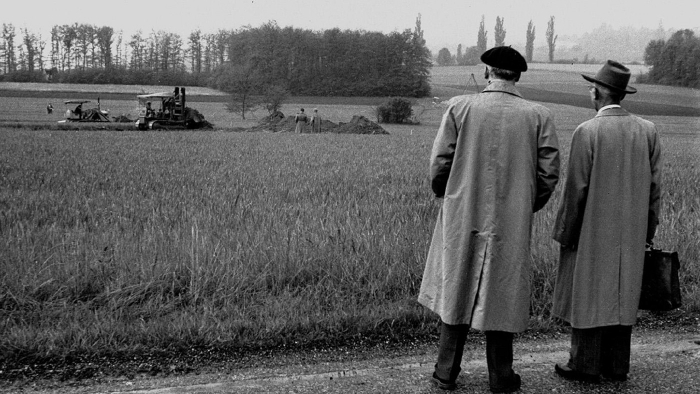
Today, CERN, the European Organization for Nuclear Research, is blowing out 60 candles at an event attended by official delegations from 35 countries. Founded in 1954, CERN is the largest particle physics laboratory in the world and a prime example of international collaboration, bringing together scientists of almost 100 nationalities.
CERN’s origins can be traced back to the late 1940s. In the aftermath of the Second World War, a small group of visionary scientists and public administrators on both sides of the Atlantic identified fundamental research as a potential vehicle to rebuild the continent and to foster peace in a troubled region. It was from these ideas that CERN was born on September 29, 1954, with a dual mandate to provide excellent science and to bring nations together. This blueprint for collaboration has worked remarkably well over the years and expanded to all the continents.
“For six decades, CERN has been a place where people can work together, regardless of their culture and nationality. We form a bridge between cultures by speaking a single universal language, and that language is science,” says CERN Director General Rolf Heuer. “Indeed, science is an essential part of culture. Maestro Ashkenazy, conducting the European Union Youth Orchestra here today, puts it most eloquently in saying that while music reflects the reality of our spiritual life and tries to convey to us the essence of our existence, science’s mission is extremely similar; it also tries to explain the world to us.”
CERN came into being in 1954 when its convention, agreed by 12 founding member states, came into force. Over the years and with its continuing success, CERN has attracted new countries and become a truly global organization, Today it has 21 member states and more than 10,000 users from all over the world, and more countries have applied for membership.
“Over time, CERN has become the world’s leading laboratory in particle physics, always oriented towards, and achieving, excellence,” says CERN Council President Agnieszka Zalewska.
CERN’s business is fundamental physics, aiming to find out what the universe is made of and how it works. Since CERN's founding, the landscape of fundamental physics has dramatically changed. Then, knowledge of matter at the smallest scales was limited to the nucleus of the atom. In 60 years, particle physicists have advanced knowledge of forces and matter at the smallest scales, developed a sound theory based on this knowledge—the Standard Model—and improved the understanding of the universe and its beginnings.
Over the years, physicists working at CERN have contributed to this progress as a series of larger and ever more powerful accelerators have allowed researchers to explore new frontiers of energy. Among the many results achieved, some discoveries have dramatically improved comprehension of the fundamental laws of nature and pushed forward technologies. These include the discovery of the particle carriers of the weak force, rewarded with a Nobel Prize for Carlo Rubbia and Simon van der Meer in 1984, the invention of the world wide web by Tim Berners-Lee in 1989, the development of a revolutionary particle detector by Georges Charpak, rewarded by a Nobel Prize in 1992, and the discovery of the Higgs boson in 2012, proving the existence of the Brout-Englert-Higgs mechanism, which led to a Nobel Prize for Peter Higgs and François Englert in 2013.
Today CERN operates the world’s leading particle accelerator, the Large Hadron Collider. With the restart of the LHC next year at new record energy, CERN will continue to seek answers to some of the most fundamental questions about the universe.
CERN published a version of this article as a press release.
CERN gets new Guinness World Records title
When research worlds collide
Particle physicists and scientists from other disciplines are finding ways to help one another answer critical questions.
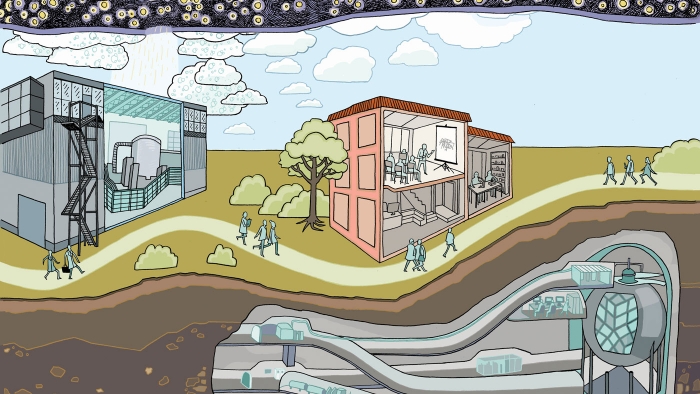
When particle physics and other fields of science meet, interesting things happen. Cosmic rays are put to use studying cloud formation. A particle detector tackles questions about aircraft engineering. Invisible particles offer clues about the interior of the Earth.
All researchers are trying to understand how the world works; they just go about it in different ways. Through interdisciplinary projects, scientists from different backgrounds can offer one another new technology, techniques and perspectives.
Researchers Jasper Kirkby of CERN, Anton Tremsin of the University of California, Berkeley, and Bill McDonough of the University of Maryland have all reached out to forge unique connections with other researchers, pursuing diverse goals with tools from particle physics.
Understanding climate with cosmic rays
Jasper Kirkby is an experimental particle physicist who’s worked on several big accelerator experiments at SLAC National Accelerator Laboratory and CERN since 1972.
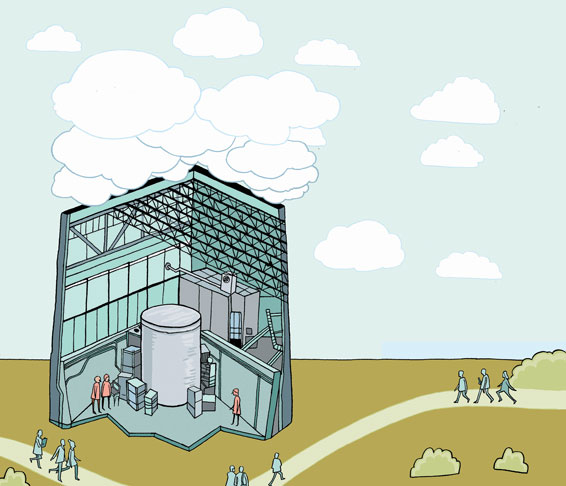
Nearly 20 years ago, he heard a talk about cosmic rays and cloud formation. Cloud formation is a key component of climate models because clouds scatter sunlight, providing a cooling effect in the atmosphere. As Kirkby learned at the talk, cloud formation seemed to correlate with the appearance of cosmic rays, high-energy particles—mostly protons—that rain on the Earth from space.
Clouds form when water condenses around aerosol particles, tiny liquid or solid particles suspended in the air. It was speculated that cosmic rays ionizing atmospheric vapors could help these cloud seeds to form. However, both aerosol particle formation and atmospheric vapors are poorly understood.
After the talk, Kirkby wrote a paper about how this process could be investigated under controlled conditions in the laboratory using an ultra-clean atmospheric chamber and a proton beam to simulate the cosmic rays. He called the proposed chamber CLOUD, for Cosmics Leaving Outdoor Droplets. Kirkby then went on a roadshow around Europe to discuss his ideas with the atmospheric community, starting at University of Berne in May 1998.
“With interdisciplinary ideas, you really stick your neck out,” Kirkby says. “And I did not want to do this unless the atmospheric community thought it was a good idea.”
Kirkby picked up collaborators along the way and formed what he calls a “dream team” for the CLOUD experiment. “There is a mixing of scientific cultures and techniques that can be very powerful,” Kirkby says. “No one person has all the answers, but each individual brings in novel ideas and expertise.”
Members of Kirkby’s team are able to introduce trace amounts of different vapors at the part-per-trillion level into the CLOUD chamber. They use measurements of the actual atmosphere to determine which mixtures to test. “We can isolate precisely what vapors are important and quantify how they interact under different conditions,” Kirkby says, “but we need the field measurements to narrow down the choices.”
The CLOUD team now consists of 80 scientists from 17 different institutions in nine countries. They receive funding from CERN, a variety of other organizations in Europe and Russia, and the National Science Foundation. The collaboration has published several papers in Nature and Science that have established the main vapors responsible for formation of cloud seeds.
Getting started was difficult, though, Kirkby says, because funding for cross-disciplinary projects can be difficult to secure. “You fall between the cracks of traditional funding agencies,” he says. “Interdisciplinary research can be a high-risk venture, like a start-up. It’s not for the faint-hearted. But you have the possibility to make disruptive scientific advances.”
One tool for many scientists
Sometimes, instead of a research puzzle, you have a tool just waiting for a new problem to solve.
Anton Tremsin, a researcher at the Space Science Laboratory at UC Berkeley, works with Timepix, a chip that rapidly collects and digitizes signals from particles. The chip is based on technology initially developed to measure particles in accelerator experiments at CERN.
Timepix chips can be used in neutron imaging, which works somewhat like X-ray imaging. In an X-ray image on film, areas with the highest density or the heaviest elements—for example, the bones or teeth in an X-ray of a body—look the brightest. Dense areas contain the most electrons, which interact with the X-rays and stop them from passing through to leave their mark on the film.
Neutrons, however, interact with the nuclei of atoms. So a neutron image can be more nuanced than an X-ray image. It can distinguish between many types of materials, each of which affects the neutrons in a different way. Neutron imaging can reveal the different organs inside a horsefly, show the concentration of hydrogen in a metal or find a flower growing behind a granite wall.
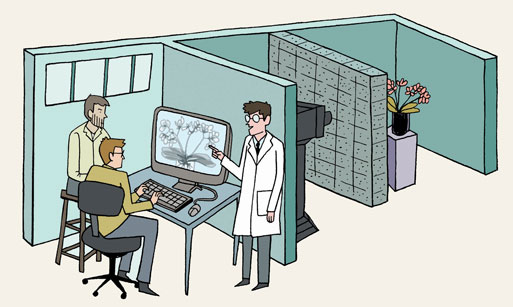
Today, Timepix is used to test the stability of aircraft, to examine ancient Japanese swords and to evaluate meteorite samples, among other diverse projects.
“It’s been so variable in terms of applications,” Tremsin says. “I couldn’t even predict how Timepix might be used in the future.”
The collaboration involved in developing Timepix is large, with dozens of groups actively using the technology. With funding from NASA, NSF and the Department of Energy, Tremsin works with two Timepix chips he built at UC Berkeley and later installed at Rutherford Appleton Laboratory in Oxfordshire, England, and at Oak Ridge National Laboratory in Tennessee. Both of these labs are hubs for neutron imaging.
A colleague at Oak Ridge National Laboratory put Tremsin in contact with Yan Gao, a senior scientist at GE Global Research in Schenectady, New York. Gao uses Timepix to evaluate turbine blades used for aircraft engines and generators.
The two researchers have now been working together for more than a year.
“It’s been a fruitful and active collaboration,” Gao says. “Anton not only has scientific talent, but he’s also persistent in trying to use his detector to solve real-world problems.”
The blades for aircraft engines must be made of a material that can withstand stress under high temperatures, Gao says. “To develop such a material, you need to understand the microstructure,” he says. “And to do this type of imaging well, you need a detector with high resolution like Timepix.”
Gao often works with researchers at universities and national labs. He says frequent communication with a wide range of scientists is key to ensuring that people with useful tools meet people with interesting research questions.
Tremsin has also paired up with Ed Perfect, professor of earth and planetary sciences at the University of Tennessee.
For Perfect, the allure of Timepix is its ability to monitor changes over time. He uses Timepix chips to look at the ways hydrogen-rich liquids such as water and oil travel through different earth materials. Understanding this movement is important for a broad range of processes, including hydraulic fracturing and enhanced oil recovery.
To study the flow of fluid through sandstone and shale, Perfect brings water into contact with the base of fractured rock cores at Oak Ridge’s CG-1D neutron imaging beam line. The water is drawn into the fracture zone upon contact. Perfect says he has been surprised by how quickly fluids can move through these porous media.
“With the imaging from this detector, we are able to capture dynamic processes we’ve not really seen before,” Perfect says. “In fact, I’m still scratching my head about how to interpret the observations, because it’s not explained by our traditional theory.”
Although its list of applications is already quite long, Tremsin still thinks there are more ways to use Timepix. “We’re still trying to demonstrate what can be done and what can be measured,” he says. “I hope there will be many more new applications.”
Using neutrinos to discover what's beneath our feet
Bill McDonough, professor of geology at the University of Maryland, first connected with particle physics when he was asked to review a paper submitted to Nature in 2005. The paper announced the detection of geoneutrinos—neutrinos emitted during the radioactive decay of uranium and thorium in the Earth’s interior—by the KamLAND experiment in Japan.
McDonough had never been asked to serve as a reviewer for a particle physics publication. He was intrigued, in part because a decade earlier he had written a paper about the estimated abundance of different elements, including uranium, in the Earth’s interior.
“Like others, I made a hypothesis, but I never thought we’d be able to measure how much uranium is inside the Earth,” McDonough says.
The KamLAND geoneutrinos result wound up making the cover of Nature. “The first detection of geoneutrinos from beneath our feet is a landmark result,” McDonough wrote in the introduction to the article. “It will allow better estimation of the abundances and distributions of radioactive elements in the Earth, and of the Earth's overall heat budget.”
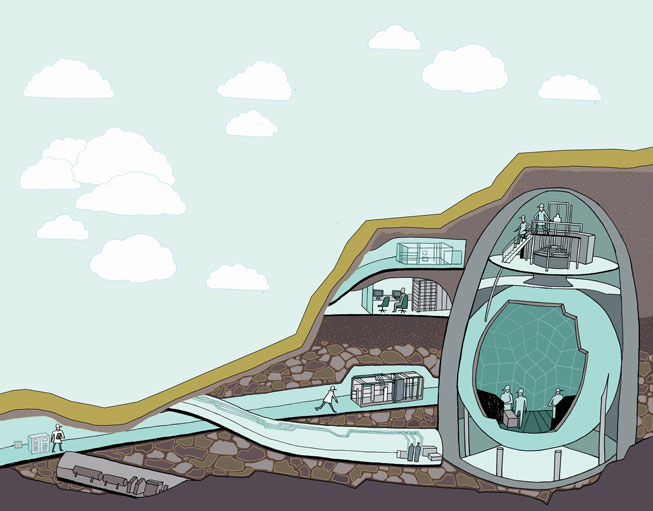
Of all the elements, three—uranium, thorium and potassium—produce over 99 percent of the heat from one of the two sources of Earth’s interior energy, radioactive decay. The other source is primordial energy, kinetic energy leftover from the formation of the Earth and its core.
Earth’s interior energy powers a long list of big processes on the Earth’s surface: plate tectonics, the formation and movement of new oceanic crust; subduction, the movement of an oceanic plate beneath the crust and inside the Earth; convection, the stirring of the mantle; and also the creation of the magnetosphere through convection in the liquid outer core.
After the Nature paper was published, one of the authors, John Learned, a professor and member of the high-energy physics group at the University of Hawaii, called McDonough to discuss working together to measure the Earth’s energy budget with geoneutrinos.
“Since then, we’ve been trading information at a high rate,” Learned says. “Bill has given us the data and geological models we need to predict the neutrino flux.”
There are ways to measure the heat coming out of the planet. But before geoneutrinos, it was difficult to know its source. “As a chemist, I would like to take the Earth, dissolve it in a beaker and then analyze it and tell you exactly what its composition is,” McDonough says. “There are of course consequences to dissolving the Earth.”
McDonough receives most of his funding from NSF. But geoneutrino studies are a truly a global effort, with currently operating detectors in Japan and Italy, one coming online soon in Canada and another planned in China. Learned and McDonough are working together to plan a detector, to be constructed in Hawaii, that can be moved around on the ocean floor.
“We help each other understand the other’s field,” McDonough says. “We all have a high level of curiosity and drive to answer these questions.”
It takes years to get results from geoneutrino experiments. The detector in Japan sees about one geoneutrino every month, and the detector in Italy one every two to three months. But all the while, scientists are learning.
“We know less about the center of the Earth than we do about the sun,” Learned says. “We do not understand what’s beneath our feet, except for a few kilometers down. Neutrinos give us a chance to probe.”
When sciences meet
Researchers are using particle physics technology to understand some of the biggest processes on the planet and to observe its tiniest and most inaccessible nooks and crannies.
The partnerships forged to do this research can bring new energy as new ideas flow, Kirkby says. “Scientists tend to get specialized, but you get a chance to break away from that,” he says.
“And it’s a lot of fun to learn so much new stuff.” When scientists get creative, it creates opportunities for better science, with exciting results.
Cosmic dust proves prevalent
Pursuit of dark matter progresses at AMS
XKCD creator answers ‘What if?’
Science gets social
If you like your science with a cup of coffee, a pint of beer or a raucous crowd, these events may be for you.

With an explosion of informal science events popping up around the world, it’s easier than ever to find ways to connect with scientists and fellow science enthusiasts.
Can’t find an event near you? Start your own! There are plenty of ways to reach out to fellow organizers for support.

Science Slam
At a Science Slam, performers compete for the affection of an audience—usually registered by clap-o-meter—by giving their best short, simple explanations of their research.
The first Science Slam took place in 2004 at a festival in Darmstadt, Germany, home of the GSI Centre for Heavy Ion Research and mission control for the European Space Agency. Alex Deppert, a city employee and poet with a PhD related to science communication, adapted the idea from the competitive Poetry Slams that started in Chicago in the 1980s. Science Slams now take place across the globe.

Science Festivals
Festivals offer a variety of activities for adults, from live tapings of “You’re the Expert,” a podcast in which comedians attempt to guess the obscure specialty of a scientist guest; to science pub crawls; to after-hours events at local museums; to the Festival of Bad Ad Hoc Hypotheses—an event created by cartoonist Zach Weiner of the online comic Saturday Morning Breakfast Cereal at which scientists attempt to sincerely explain and defend fundamentally ridiculous theories before a panel of judges.
The modern science festival began in the late 1980s in Edinburgh, Scotland, and Cambridge, England. It spread across Europe and Asia and, in 2007, arrived at a different Cambridge, the home of MIT and Harvard University.
In 2009, the handful of US-based festival organizers formed the Science Festival Alliance. According to an annual report, in 2013 almost 300 events associated with the Science Festival Alliance drew more than 1000 visitors. About 30 of them drew more than 10,000 visitors each.

Nerd Nite
At Nerd Nite, a few people give short talks on their research or other topics of geeky interest in front of a potentially boozy crowd.
The first Nerd Nite took place in 2004 at The Midway Café bar in the Jamaica Plain neighborhood of Boston. Regular patron Christopher Balakrishnan, then a PhD candidate in evolutionary biology at Boston University, often found himself there telling tales from his three-month fieldwork stints in Africa. The bartenders suggested that he call his friends together and put on a slideshow.
Balakrishnan took the concept to the next level, inviting three other BU grad students to join him in explaining their own areas of research. The event drew enough of a crowd that, for the next couple of years, he continued to find researchers and organize talks. He eventually convinced his friend Matt Wasowski, who ran a series of trivia nights in New York, to try it out, too. The two have since helped spread Nerd Nite to more than 75 cities around the world.

Science Café
The Science Café is the salon of the informal science-learning world. For the price of a cup of coffee or a glass of wine, Science Café participants receive a short talk on science or technology, and then the floor opens for discussion and debate.
The Science Café is an offshoot of the Café Scientifique, created in 1998 in Leeds, England, by British television producer Duncan Dallas. The Café Scientifique, in turn, is a spinoff of the Café Philosophique, a philosophy-themed café that began in France in 1992.
In 2006, the producers of the public television science program NOVA gathered under one umbrella the few dozen Science Cafés that had popped up in the United States and began to offer resources to organizers, speakers and attendees through the site www.sciencecafes.org.
Today Science Cafés exist in at least 49 US states and 15 countries, operating under names such as Science on Tap, Science Pub, Ask a Scientist and Café Sci.

Science Tourism
You can also take science learning on the road—or out to sea—with science tourism companies such as Science Getaways, started in 2011 by astronomer Phil Plait and his wife, Marcella Setter, or Insight Cruises, which since 2008 have taken experts on board to offer lectures, discussions and tours.

 Frascati Scienza
 Buco Nero
 Io Non Faccio Niente
 Tommaso Dorigo
 Giovanni Mazzitelli
 Barbara Gallavotti
 Keplero Blog
 Research Gate