
TRIUMF announces photo contest winners
Visiting photographers get an insider’s view of Canada’s national particle and nuclear physics laboratory.
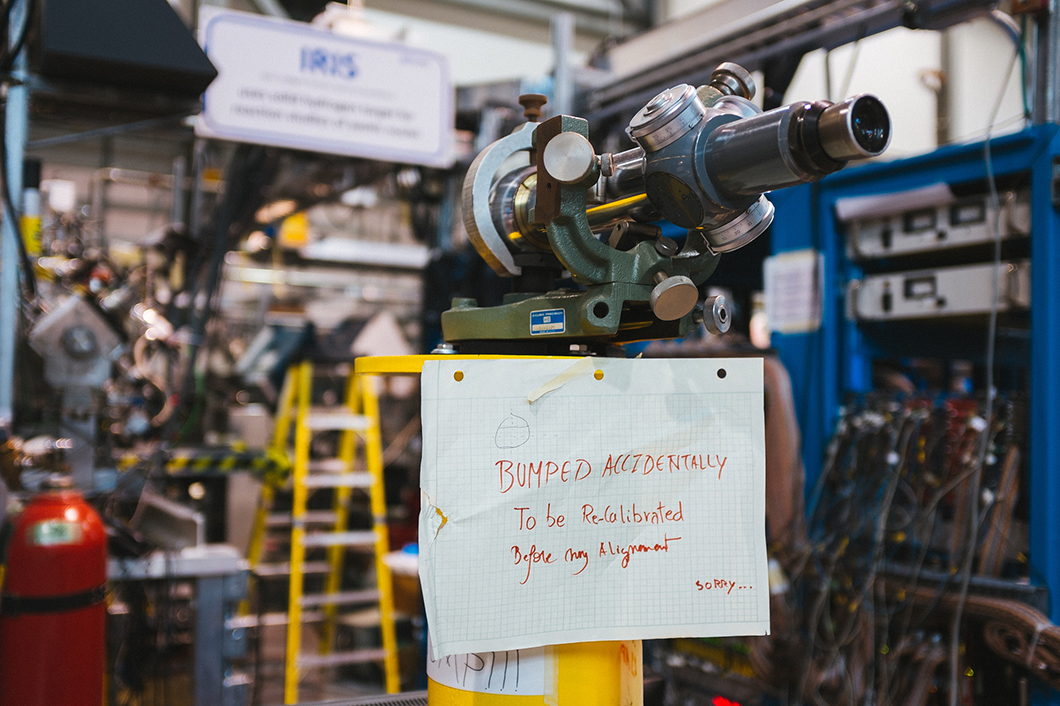
Of course the winning entry in a photo competition at a Canadian laboratory involves the word “sorry.”
In October, Canada’s national particle and nuclear physics laboratory, TRIUMF, invited Vancouver-based photographers to tour the facility and submit their images to be judged by the public, TRIUMF scientists and a jury of local experts.
The jury included TRIUMF artist-in-residence Ingrid Koenig, a professor at Emily Carr University of Art + Design; Mila Cotic, community engagement manager and former exhibits manager at the Science World museum in Vancouver; Rebecca Ind, communications and events coordinator for the University Neighbourhood Association; and Christine D’Onofrio, a member of the visual art faculty at the University of British Columbia.
They awarded first prize to Justin Lee for Bumped, a photograph of an instrument in need of repair after being knocked out of alignment accidentally, as explained in a polite, handwritten note.
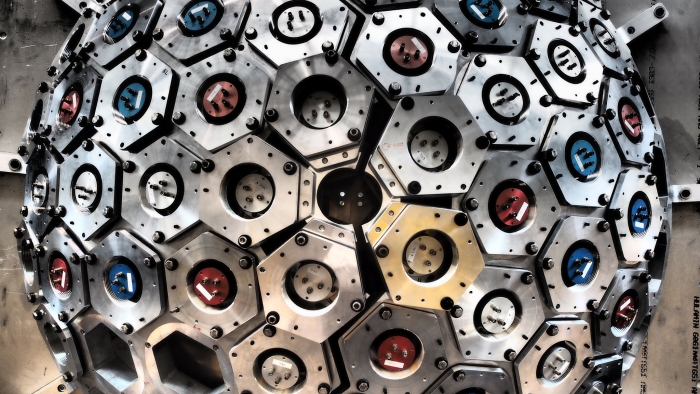
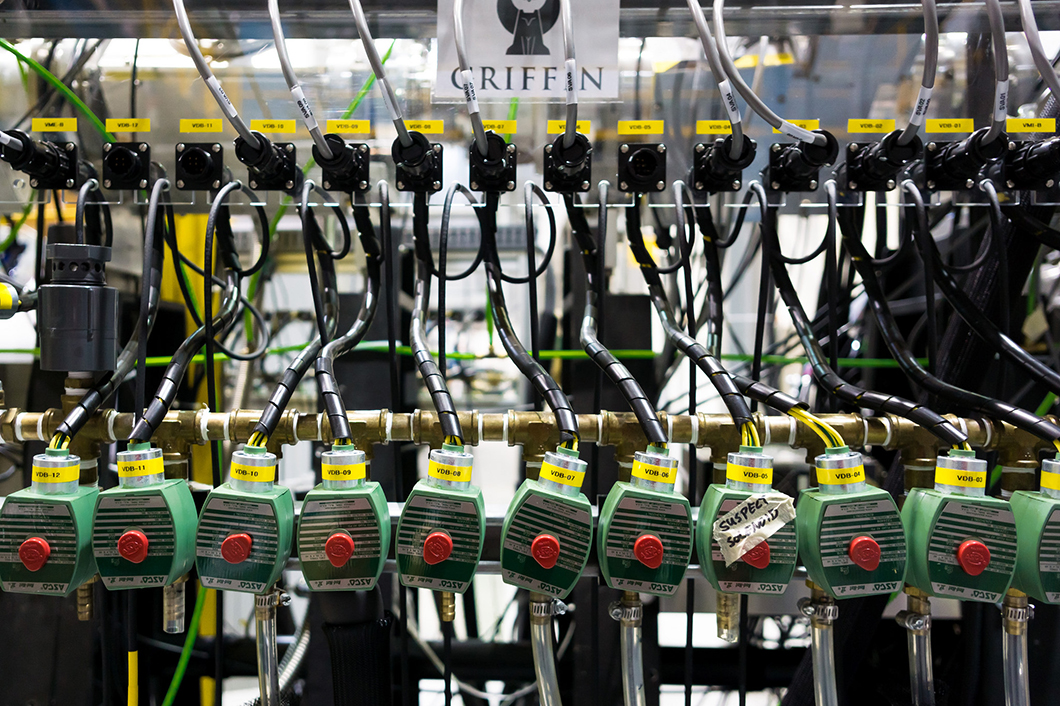
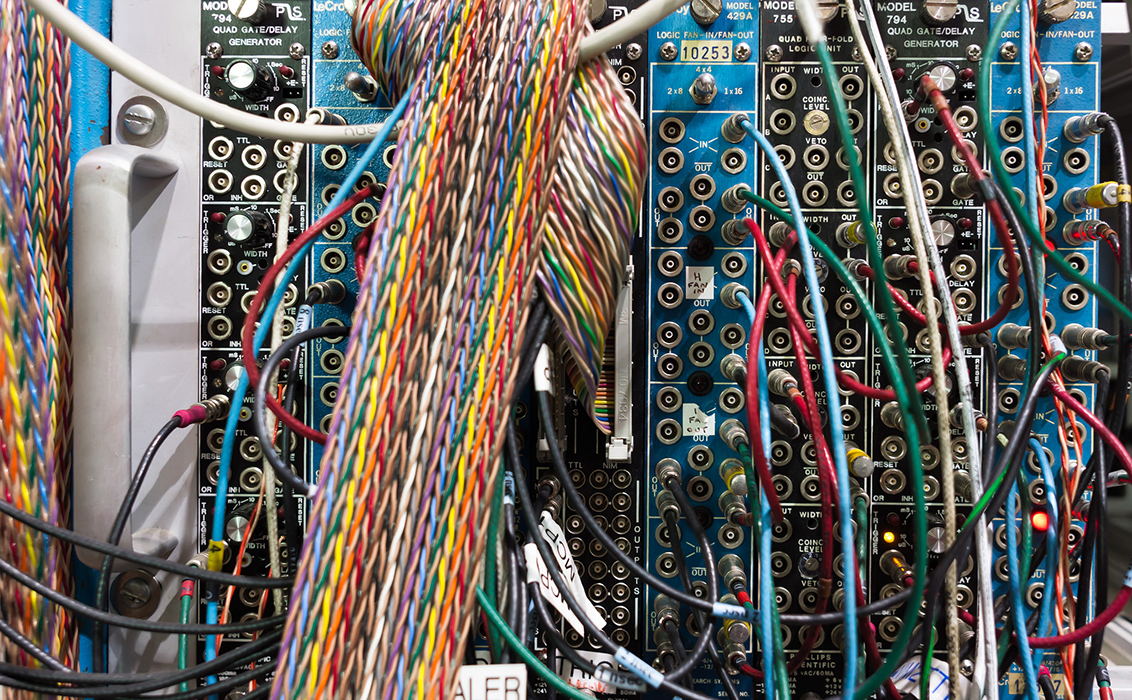
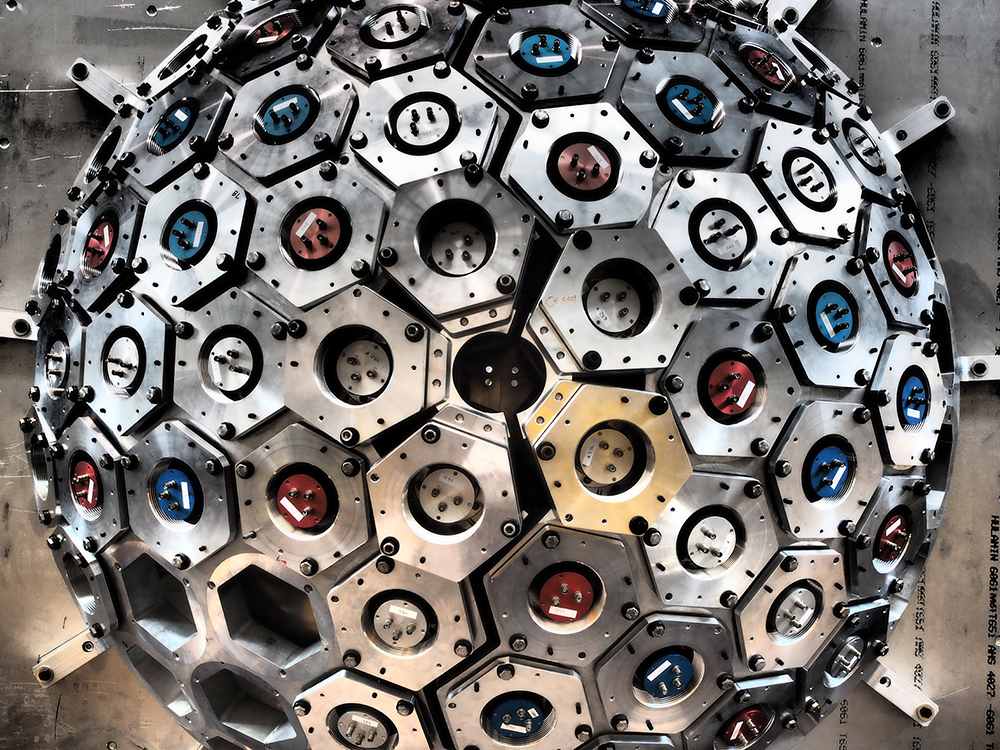
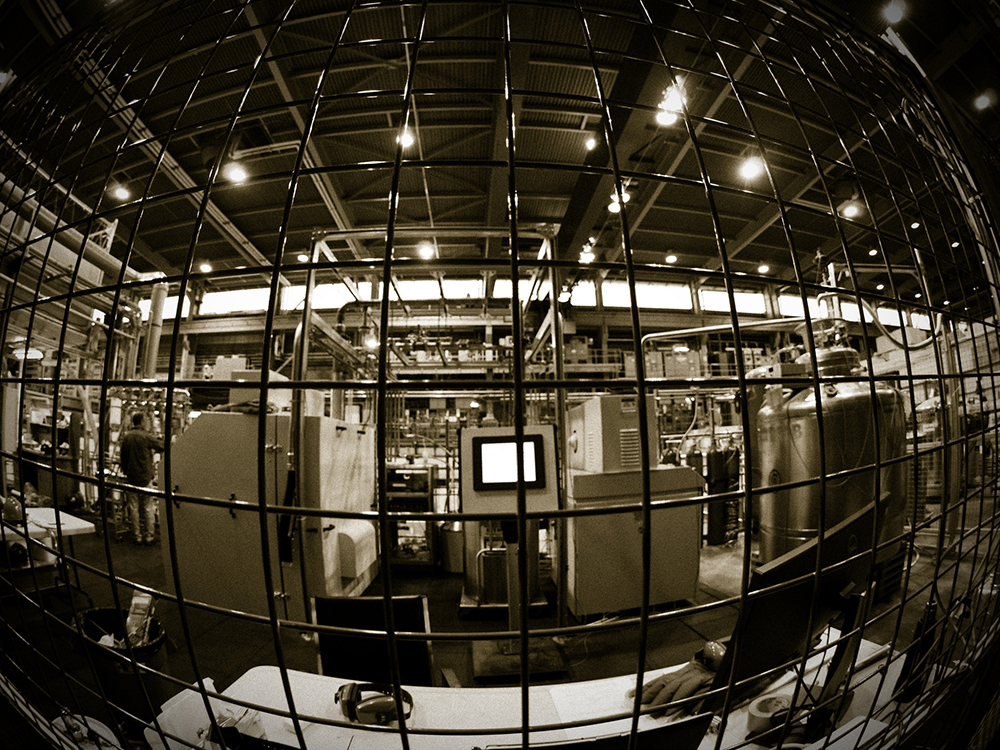
But it wasn’t just apologetic lab employees that made an impression on the judges. The jury awarded second and third place to photographer Sean Birch for photographs of the paraphernalia of science: One half of GRIFFIN and Rainbow Cables.
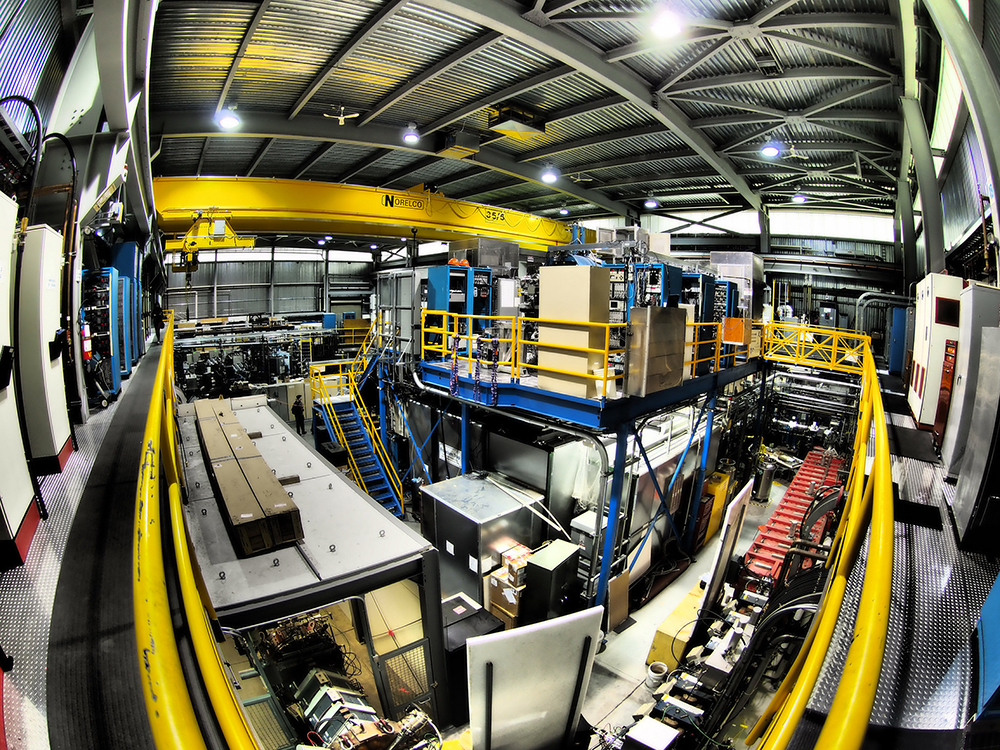
“On the tour, it was surprising to see the mixture of old and new, and the occasional vintage-looking piece of equipment still in operation,” Birch said in an interview with TRIUMF writer Kyla Shauer. “The dichotomy that exists between the cutting-edge and the visually old-fashioned was a source of amusement and wonder.”
In what might answer the question of how scientists see themselves, TRIUMF judges gave half of third place to Concussive Conclusions, Ron Kelly’s photograph of two people mid-leap next to a piece of machinery.
“The real essence of TRIUMF is frenetic: particles with immense energy and speed, racing along and smashing into each other,” Kelly told Shauer. “This occurs away from prying eyes and can only be viewed metaphorically: bouncing and colliding homo sapiens jostle each other on their way to insight.”
The winning photos will be exhibited at Science World in January 2015. The top 40 entries can be viewed on Flickr.
Jury's Choice: 1st Place
Jury's Choice: 2nd Place
Jury's Choice: 3rd Place
Scientists' Choice: 1st Place
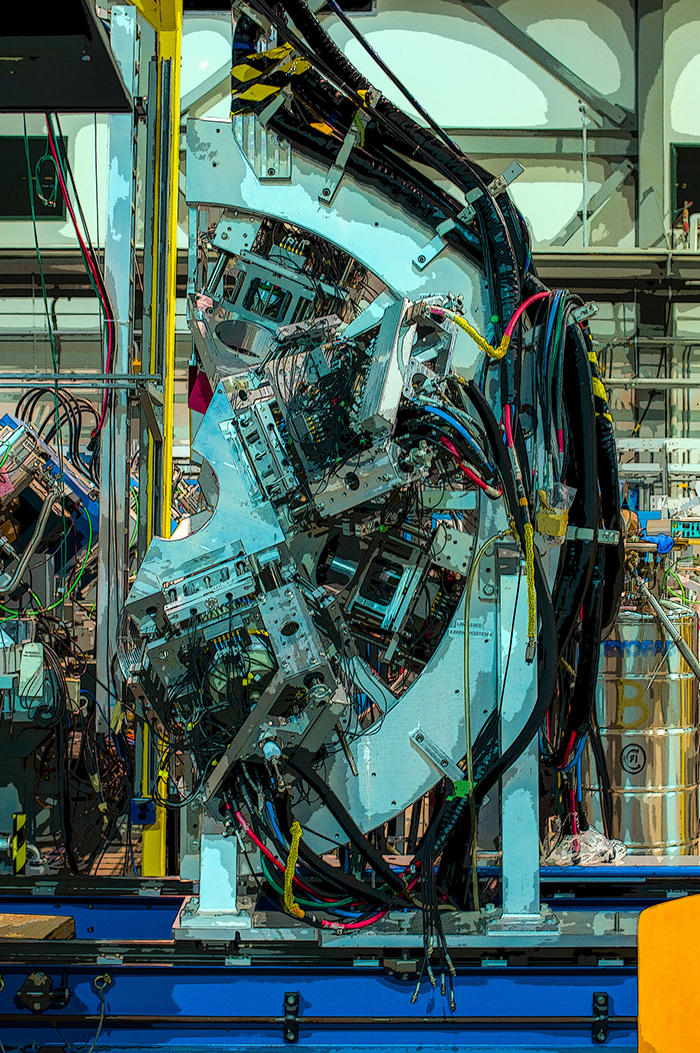
Scientists' Choice: 2nd Place
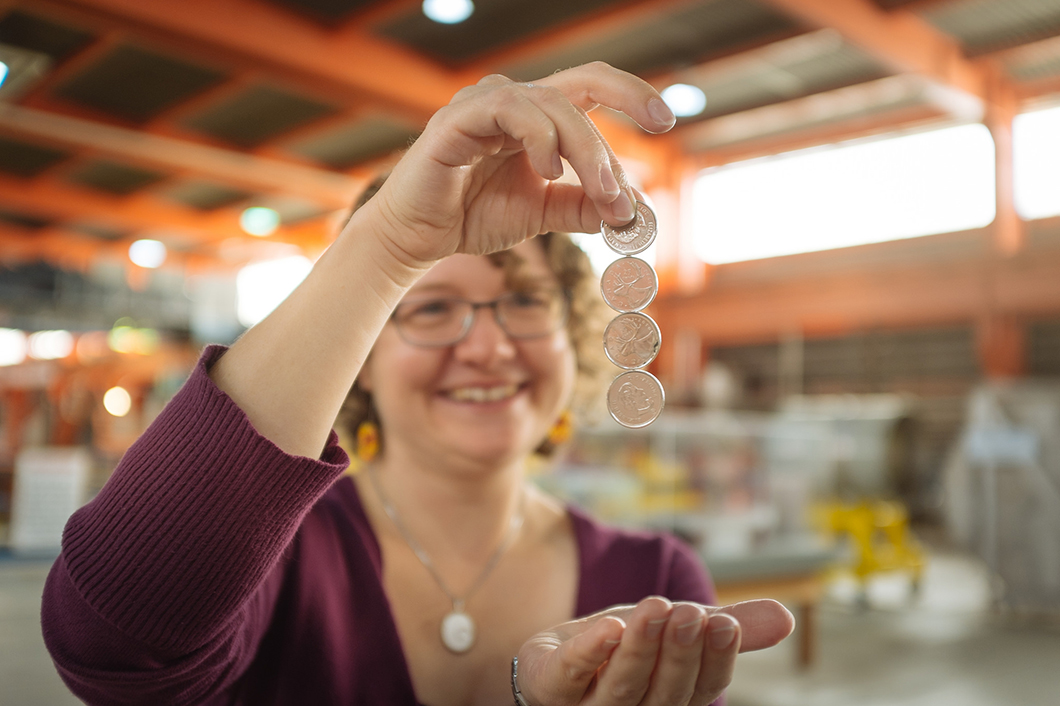
Scientists' Choice: 3rd Place (tied)
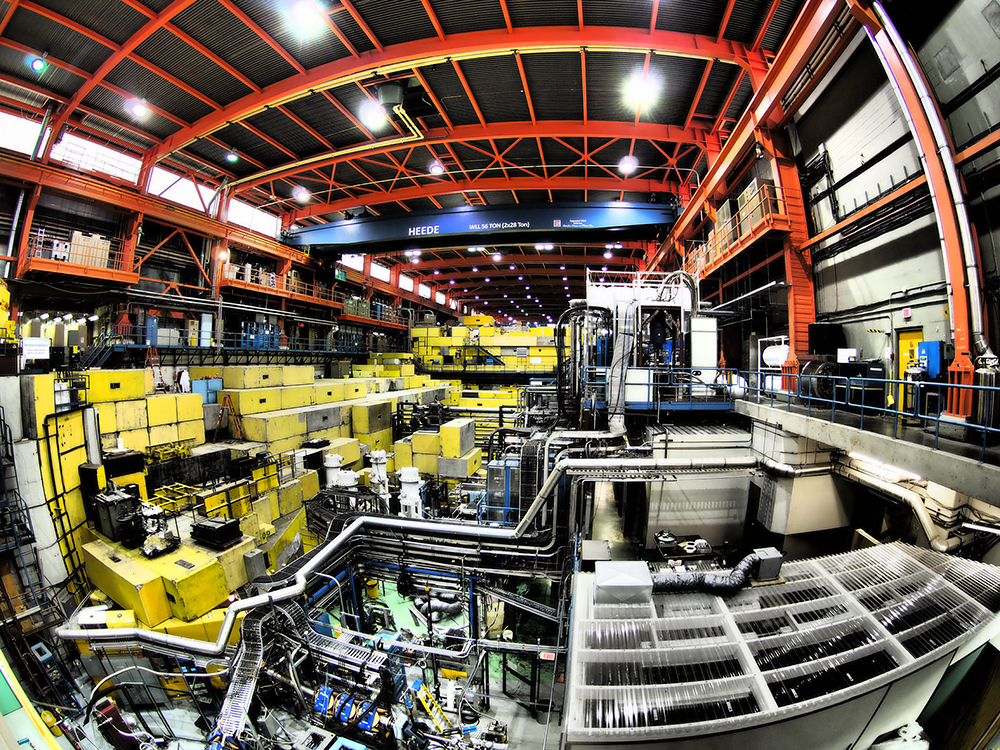
Scientists' Choice: 3rd Place (tied)
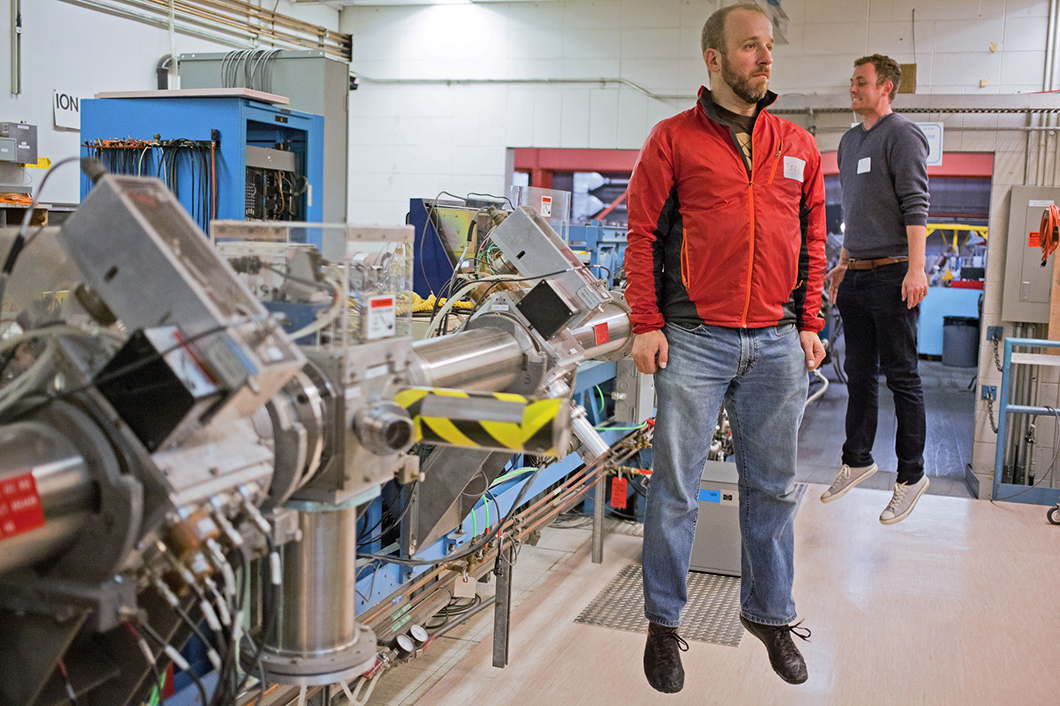
People's Choice: 1st Place
People's Choice: 2nd Place
People's Choice: 3rd Place
Physicist turned carbon catcher
Particle physics inspires ASU professor Klaus Lackner's work on climate change.
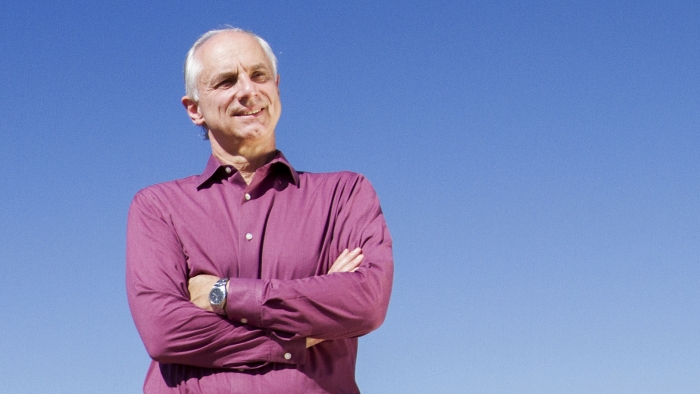
In the early 2000s, physicist Klaus Lackner decided to change fields based on one powerful idea: that we can pull carbon out of the air fast enough to counter global warming.
Carbon in the air predominantly exists as carbon dioxide, a greenhouse gas that traps heat in the atmosphere. Climate scientists agree that increasing levels of carbon dioxide are contributing to climate change. Around the world, scientists are searching for ways to control greenhouse gas emissions.
So how did a physicist transition from hunting the smallest fundamental particles to capturing relatively large molecules like carbon dioxide?
It started with a concept paper Lackner co-wrote in 1995 about a solar-powered self-replicating machine that might pull carbon from the air. The idea was mostly an “exciting thought experiment” to Lackner, he says.
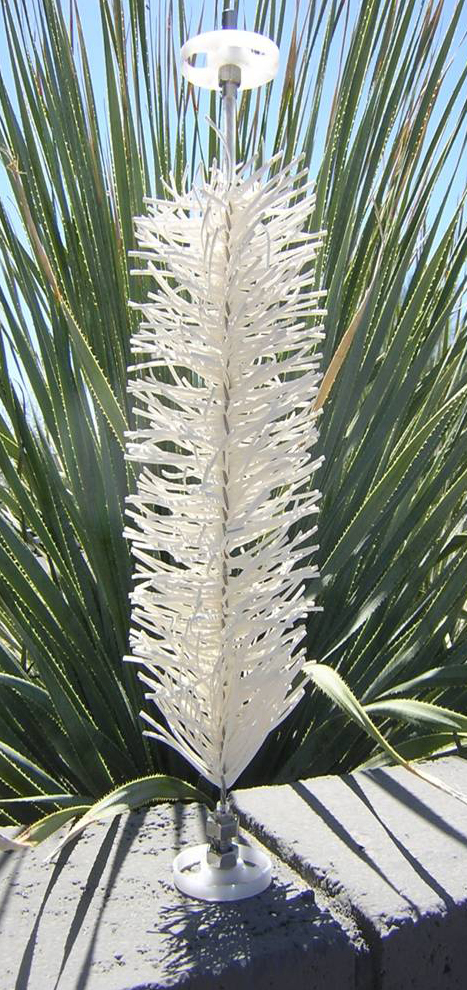
But the real turning point came four years later at a science fair, where Lackner’s teenage daughter Claire used a fish pump to move air past a filament coated with sodium hydroxide. The powerful base captured half of the acidic carbon dioxide, earned her first place, and encouraged her father to apply his physics training to make the process more efficient.
“As a particle physicist, you are thinking about complicated systems and looking for symmetries that hold them all together,” Lackner says. “This back-and-forth between thinking big and pulling on it till you get it right, that comes from physics training.”
As a result, in 2008, Lackner revealed his “mechanical tree,” a device that captures carbon from the ambient air in a rinsable filter, eliminating the need for an expensive pump.
A physicist by training
Lackner spent 13 years working on carbon capture and energy at Columbia before taking his current position as head of Arizona State University’s Center for Negative Carbon Emissions. Through it all, his physics training has always shaped his scientific outlook and work.
As a teenager in Germany, Lackner was inspired by American physicist George Gamov’s popular book One, Two, Three…Infinity. He enrolled in the Heidelberg University physics program in the 1960s, where he received his PhD in particle physics.
Over his career, Lackner worked with some of the biggest names in science. At Heidelberg he studied under Nobel Laureate Hans Jensen, recognized for his “shell” explanation of the atom’s nucleus. An invite from Murray Gell-Mann, who won a Nobel for his work classifying elementary particles and their interactions, brought Lackner to Caltech. There, Lackner investigated that subatomic particle’s fractional charge with George Zweig, famous for his work on the quark model independent of Gell-Mann.
“I loved coming to Caltech,” says Lackner. “Even if you were a young postdoc, you were taken seriously. It was strictly just the message that you had to defend and explain. I found that exhilarating.”
Lackner transferred to SLAC National Accelerator Laboratory and later to Los Alamos National Laboratory. While there, he worked with Nobel laureate Martin Perl on a SLAC-based large-scale search for isolated, uncoupled quarks.
During nearly two decades at Los Alamos, Lackner tackled a variety of research projects, including on fluid dynamics—something he says stimulated him to think more about energy.
Changing gears
Columbia University hired Lackner in 2001, where he joined well-known climate scientist Wally Broecker.
“Klaus is the most brilliant person I have ever dealt with,” Broecker says. “I always say the world is really lucky that Klaus is putting his energy into air capture.”
While he had success with theory and demonstration, Lackner’s attempts to commercialize his mechanical tree and bring it to scale have so far been unsuccessful. The economic atmosphere, which included the 2008 market crash, was not conducive to air capture enterprises, he says. Nevertheless, Broecker calls Lackner’s work critical.
“By the time we do get our energy from non-fossil fuels—if the models are anywhere near right—we are going to have to pull down the carbon dioxide level in the atmosphere,” Broecker says. “It seems to me the only way to do that is something like what Klaus is doing.”
At ASU, Lackner intends to continue his carbon capture and other Columbia University investigations, such as how to make a liquid fuel from captured carbon. He says finding space to do his work has been much easier in the desert around Phoenix than it ever was in Upper Manhattan.
LHC filled with liquid helium
The Large Hadron Collider is now cooled to nearly its operational temperature.
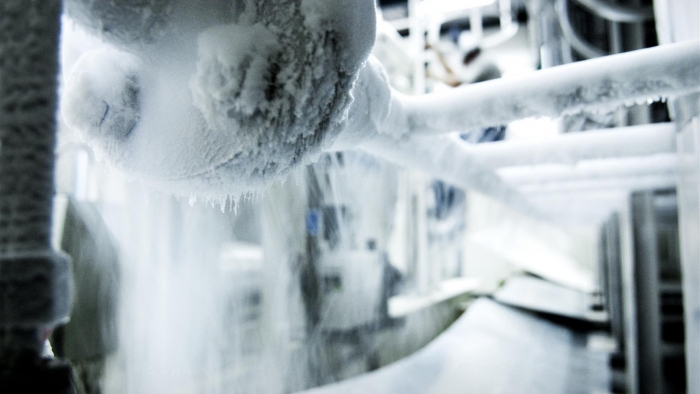
The Large Hadron Collider isn’t just a cool particle accelerator. It's the coldest.
Last week the cryogenics team at CERN finished filling the eight curved sections of the LHC with liquid helium. The LHC ring is now cooled to below 4 kelvin (minus 452 degrees Fahrenheit).
This cool-down is an important milestone in preparing the LHC for its spring 2015 restart, after which physicists plan to use it to produce the highest-energy particle collisions ever achieved on Earth.
“We are delighted that the LHC is now cold again,” says Beate Heinemann, the deputy leader of the ATLAS experiment and a physicist with the University of California, Berkeley, and Lawrence Berkeley National Laboratory. “We are getting very excited about the high-energy run starting in spring next year, which will open the possibility of finding new particles which were just out of reach.”
The LHC uses more than 1000 superconducting dipole magnets to bend high-energy particles around its circumference. These superconducting magnets are made from a special material that, when cooled close to absolute zero (minus 460 degrees Fahrenheit), can maintain a high electrical current with zero electrical resistance.
“These magnets have to produce an extremely strong magnetic field to bend the particles, which are moving at very close to the speed of light,” says Mike Lamont, the head of LHC operations. “The magnets are powered with high electrical currents whenever beam is circulating. Room-temperature electromagnets would be unable to support the currents required.”
To get the 16 miles of LHC magnets close to absolute zero, engineers slowly inject helium into a special cryogenic system surrounding the magnets and gradually reduce the temperature over the course of several months at a rate of one sector cooled per month. As the temperature drops, the helium becomes liquid and acts as a cold shell to keep the magnets at their operational temperature.
“Helium is a special element because it only becomes a liquid below 5 kelvin,” says Laurent Tavian, the group leader of the CERN cryogenics team. “It is also the only element which is not solid at very low temperature, and it is naturally inert—meaning we can easily store it and never have to worry about it becoming flammable.”
The first sector cool-down started in May 2014. Engineers first pre-cooled the helium using 9000 metric tons of liquid nitrogen. After the pre-cooling, engineers injected the helium into the accelerator.
“Filling the entire accelerator requires 130 metric tons of helium, which we received from our supplier at a rate of around one truckload every week,” Tavian says.
In January CERN engineers plan to have the entire accelerator cooled to its nominal operating temperature of 1.9 kelvin (minus 456 degrees Fahrenheit), colder than outer space.
Deck the halls with Nobel physicists
Symmetry presents a physics twist on the craft of cutting paper snowflakes.

If you’re looking for a way to decorate for the holidays while also proudly declaring your love of science, symmetry has got your back. Below you’ll find templates for paper snowflakes with winners of the Nobel Prize in Physics incorporated into the designs.
With the help of a printer, paper, an X-acto knife (preferably with some sharp replacement blades at the ready) and a cutting board or mat, you can transform your home into a flurry of famous physicists.
Simply download the snowflake templates, print them out, follow the folding instructions, and cut out the gray areas, making sure to cut through every layer of paper (but not your fingers!). Then unfold the paper and revel in your creation.
Practice makes perfect, but remember, no two snowflakes are supposed to be alike anyway.
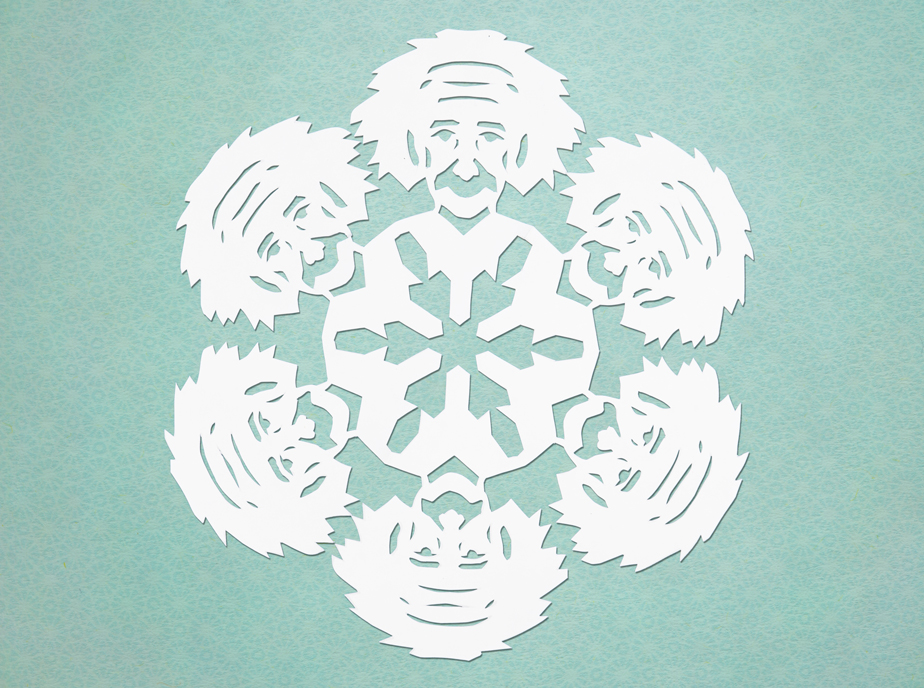
Albert Einstein
Energy and mass may be equivalent, but this Albert Einstein snowflake is beyond compare.
Marie Curie
Double Nobel Laureate Marie Curie radiates charm in this snowflake design.

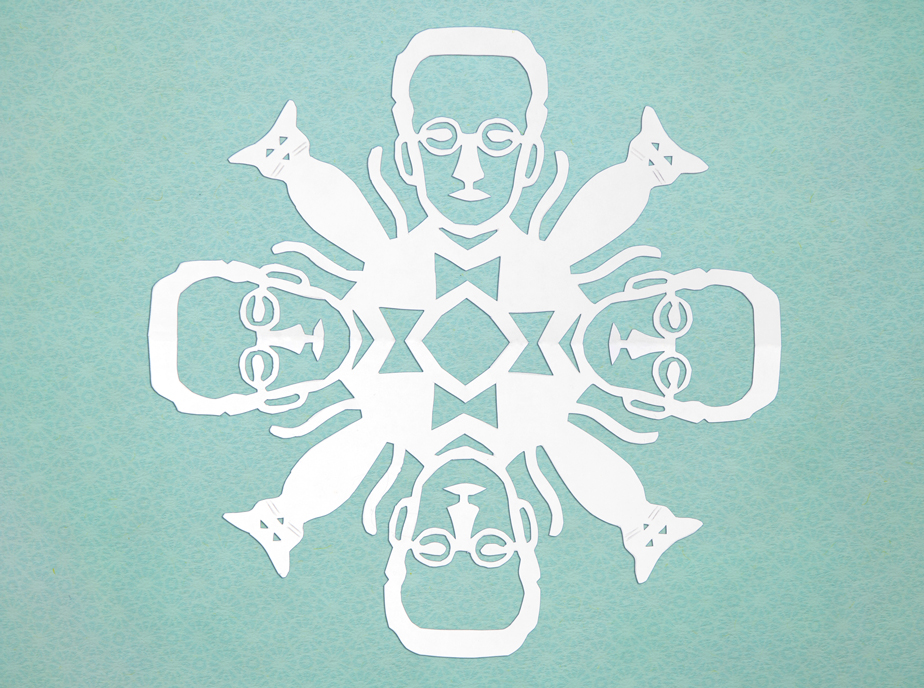
Erwin Schrödinger
Is it an Erwin Schrödinger snowflake with cats on it, or is it a cat snowflake with Erwin Schrödingers on it? You won’t know until you make it.
For advanced snowflake-making techniques, see our instructional video.
ICARUS hits the road
First LHC magnets prepped for restart
New books for the physics fan
These recently published popular science books will help you catch up on particle physics news, knowledge and history.

Looking to stay current on your particle physics knowledge? Here are 10 recent popular science books you might want to check out.
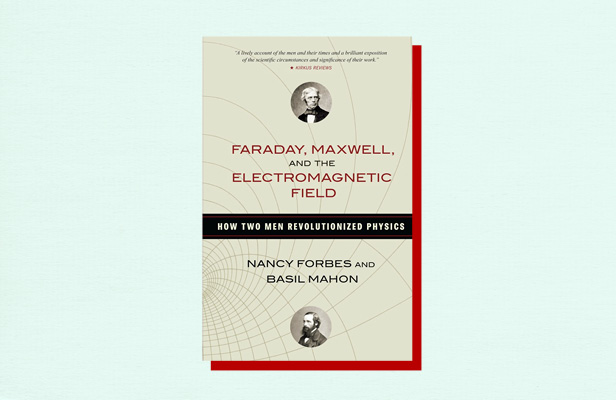
1. Faraday, Maxwell and the Electromagnetic Field: How Two Men Revolutionized Physics
Nancy Forbes, Basil Mahon
Classical unified field theory came from the realization that electricity, magnetism and light all can be explained with a single electromagnetic field.
There is no modern physics without classical unified field theory—heck, there are no electronics without classical unified field theory—and there is no classical unified field theory without Michael Faraday (1791-1867) and James Clerk Maxwell (1831-1879).
The unlikely partners, born four decades apart, shared the achievement of upending a view of the world that had prevailed since Isaac Newton.
“The extraordinary idea put forward by Faraday and Maxwell was that space itself acted as a repository of energy and a transmitter of forces,” write Nancy Forbes and Basil Mahon in Faraday, Maxwell and the Electromagnetic Field: How Two Men Revolutionized Physics.
Faraday was largely self-taught and made important realizations without the benefit of a formal education in mathematics, while Maxwell was regarded as among the most brilliant mathematical physicists of his time. This double biography examines their differing lives and explains how their combined work paved the way for modern physics.
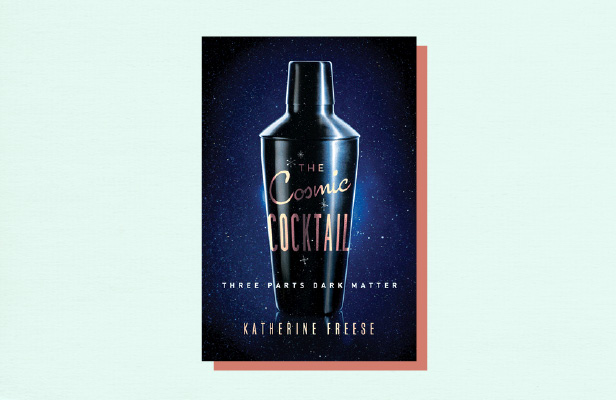
2. The Cosmic Cocktail: Three Parts Dark Matter
Katherine Freese
In The Cosmic Cocktail: Three Parts Dark Matter, physicist Katherine Freese explores the critical place dark matter occupies in our understanding of the cosmos.
It has yet to be observed directly. But, she tells us, dark matter’s day of reckoning might not be far off.
“Some new particles, unlike any from our daily experience, might be tearing through the galaxy,” she writes. “Scientists have already found hints of detection in their experiments… The nature of dark matter is one of the greatest puzzles of modern science, and it is a puzzle we are on the verge of solving.”
Freese, now the new director of the Nordic Institute for Theoretical Physics in Stockholm, admits to spending a disproportionate amount of time on the dance floor of nearby Studio 54 when she should have been focused on her doctoral studies at Columbia University. But she also tells a compelling history of the search for dark matter, from the cantankerous Fritz Zwicky’s early predictions in the 1930s to hopes for an appearance when the Large Hadron Collider fires up again in 2015.
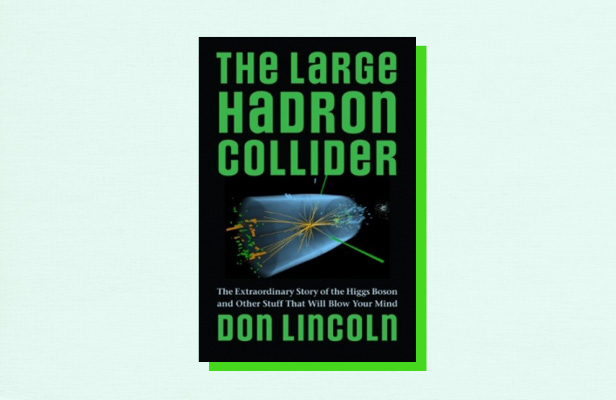
3. The Large Hadron Collider: The Extraordinary Story of the Higgs Boson and Other Stuff that will Blow Your Mind
Don Lincoln
“My goal was to give readers an inside account of the hunt and discovery,” says Fermilab scientist Don Lincoln, a member of CERN’s CMS experiment, of his latest book, The Large Hadron Collider: The Extraordinary Story of the Higgs Boson and Other Stuff that will Blow Your Mind. “Almost all of the similar books have been written by non-physicists and theorists. I went to all the meetings, so I have a unique perspective.”
In the book, Lincoln describes the process of the discovery of the Higgs boson—and explains that it is not the end of the story.
Even though the widely celebrated appearance of the Higgs particle confirmed theorists’ predictions, Lincoln maintains that the relatively light mass of the Higgs raises enough questions to keep physicists awake at night.
“The measurement is quite inconsistent with the Standard Model and the quantum corrections,” he says. “This absolutely screams that there is something still to be found and this could be supersymmetry, extra dimensions, composite Higgs bosons or some other kind of new physics. In short, we know there is something big we’re missing.”
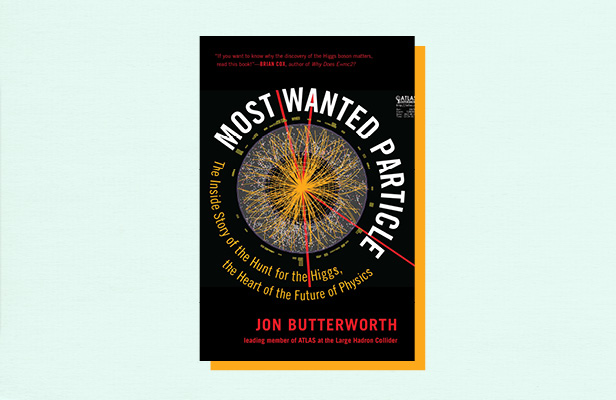
4. The Most Wanted Particle: The Inside Story of the Hunt for the Higgs, the Heart of the Future of Physics
Jon Butterworth
“I wanted it to give readers a sense of what it really feels like to work in a big experiment at such an amazing time and what it meant,” says Imperial College London physicist Jon Butterworth of his book The Most Wanted Particle: The Inside Story of the Hunt for the Higgs, the Heart of the Future of Physics. “This meant occasionally the physics had to go a bit deeper than the common analogies, but also there is a lot of non-physics story which hopefully captures the real-time excitement.”
Butterworth, who works on the ATLAS experiment at CERN, uses a personalized approach to convey a sense of scene. In one chapter, he describes explaining the Higgs discovery to British TV reporter Tom Clarke while the two shoot pool.
He also uses his current hometown in England to describe his workplace at CERN, comparing the size of the Large Hadron Collider tunnel to the size of the London Underground.
The book, released in the UK in May under the title Smashing Physics: Inside the World’s Biggest Experiment, will be released in the US in January 2015.
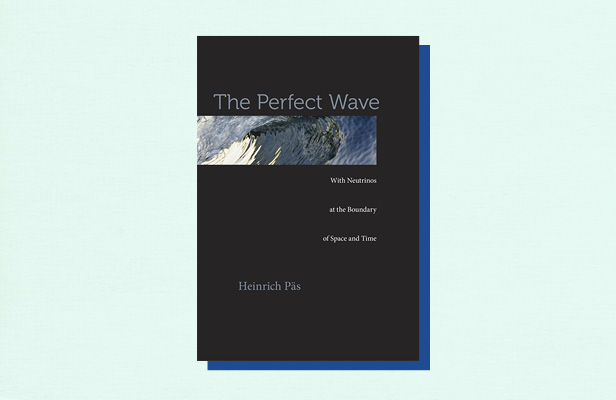
5. The Perfect Wave: With Neutrinos at the Boundary of Space and Time
Heinrich Pas
Heinrich Pas, a theorist at the Technical University of Dortmund in Germany, studies neutrinos, particles that seem to defy the rules but may hold answers to the deepest questions of the universe.
In The Perfect Wave: With Neutrinos at the Boundary of Space and Time, Pas explains how powerful processes in the cosmos—from the fusion that lights the sun to the magnificent explosions of supernovae—are bound up in the workings of the mysterious particles.
“It is a story of an elementary particle that, just like the Silver Surfer in the superhero cartoons, surfs to the boundaries of knowledge, of the universe and of time itself,” Pas writes. “A story that captivates you as it sucks you into a maelstrom like an oversized wonderland. Jump on your board and hold tight.”
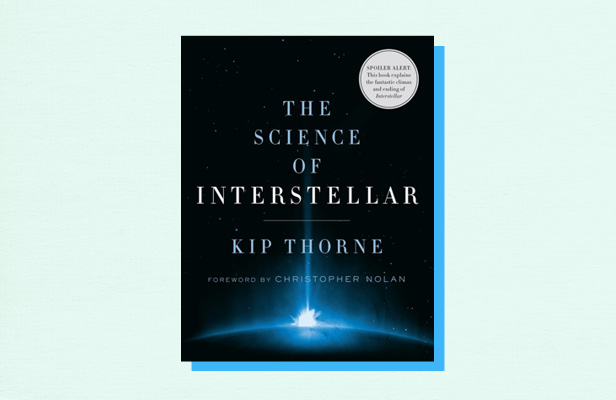
6. The Science of Interstellar
Kip Thorne
Kip S. Thorne, the Feynman Professor of Theoretical Physics Emeritus at Caltech, served as the executive producer for scientific credibility (and flexibility) on the space epic Interstellar. He explains that work in the book The Science of Interstellar.
In the film, astronaut Cooper (Matthew McConaughey) takes leaps and bounds over, under, around and through black holes and wormholes on his quest to find a refugee planet for the population of Earth, whose food supply is devastated by global blight.
Thorne writes that “[s]ome of the science is known to be true, some of it is an educated guess, and some is speculation.”
But he takes all of it seriously; Thorne and his colleagues even wrote a scientific paper based on their computer simulations of the movie’s black hole.
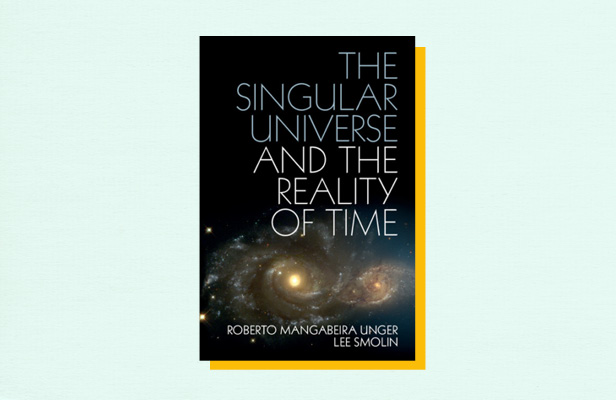
7. The Singular Universe and the Reality of Time
Roberto Mangabeira Unger, Lee Smolin
Physicist Lee Smolin of Canada’s Perimeter Institute for Theoretical Physics, author of the controversial book The Trouble With Physics, collaborated with philosopher and politician Roberto Mangabeira Unger on the new book The Singular Universe and the Reality of Time.
In it, Smolin and Unger argue against the idea of the multiverse and declare that it is time to view the cosmos as being governed by laws that are evolving rather than laws that are immutable. They contend that, “everything changes sooner or later, including change itself. The laws of nature are not exempt from this impermanence.”
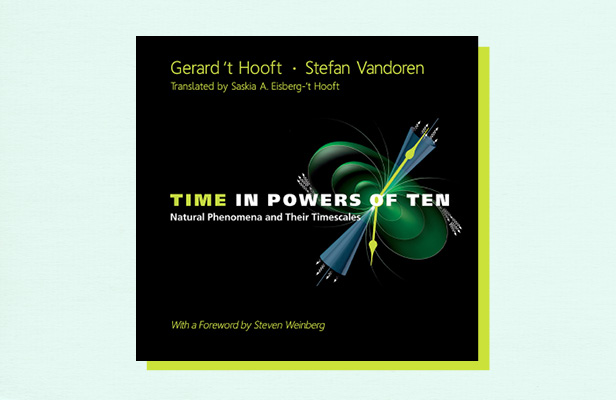
8. Time in Powers of Ten: Natural Phenomena and their Timescales
Gerard ‘t Hooft, Stefan Vandoren
In Time in Powers of Ten: Natural Phenomena and their Timescales, Nobel Laureate Gerard ‘t Hooft and theorist Stefan Vandoren, both of Utrecht University in the Netherlands, step back and forth in time from the minutest fractions of a second to the age of the universe and beyond. Observations range from the orbits and rotations of planets and stars, down to the decay times of atoms and elementary particles and back to geological time scales.
“The smallest matter mankind has studied moves considerably faster than the quickest computing processes of the most expeditious machine; while on the other side of the timescale we see planets, stars and entire galaxies of unimaginably old age, some billions of years,” ‘t Hooft and Vandoren write. “Scientists believe they know almost exactly how old the universe is, but even its seemingly eternal lifetime does not constitute a limit for physicists’ research.”

9. Travelling to Infinity: The True Story Behind the Theory of Everything
Jane Hawking
In Travelling to Infinity: The True Story Behind the Theory of Everything, readers are introduced to a young, floppy-haired Stephen Hawking through the eyes of his first wife, Jane Hawking (née Wilde). Hawking published versions of this book in both 1999 and 2007, and the book was reissued this year to accompany the film adaptation, The Theory of Everything.
In the book, Jane describes an early impression of Stephen from a New Year's party in 1963: “Clearly here was someone, like me, who tended to stumble through life and managed to see the funny side of situations. Someone who, like me, was fairly shy, yet not averse to sharing his opinions, someone who unlike me had developed a sense of his own worth and had the effrontery to convey it.”
Here is a love story in which love is not enough. Hawking leaves and marries one of the nurses who tended him. Jane marries an old family friend. The two have reconciled and are on amicable terms—a good thing when the person writing your life story is your former spouse.
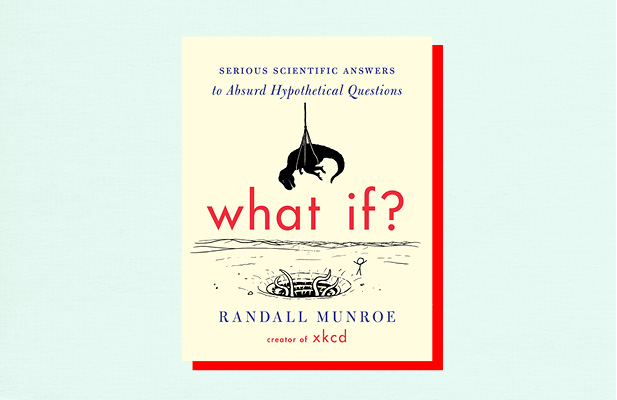
10. What If? Serious Scientific Answers to Absurd Hypothetical Questions
Randall Munroe
Randall Munroe’s stick-figure web comic strip, xkcd, comes with a warning: “This comic occasionally contains strong language (which may be unsuitable for children), unusual humor (which may be unsuitable for adults), and advanced mathematics (which may be unsuitable for liberal-arts majors).”
There are no dumb questions, only humorous and provocative answers from Munroe, a former NASA roboticist, in his book What If? Serious Scientific Answers to Absurd Hypothetical Questions. For example:
“Q – What would happen if the Earth and all terrestrial objects stopped spinning, but the atmosphere retained its velocity?
“A – Nearly everyone would die. THEN things would get interesting…”
In “What If?” what seems like the end is often just the beginning.
Vacuuming the ATLAS detector
One hundred scientists and engineers recently gave the ATLAS detector a deep cleaning in preparation for the Large Hadron Collider restart.
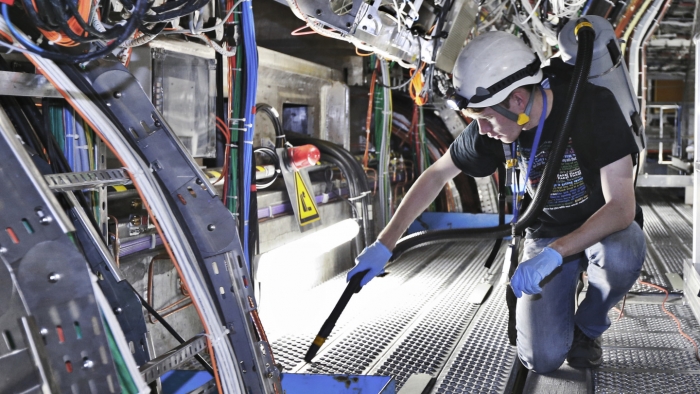
No, they’re not Ghost Busters looking for paranormal activity. Nor are they the last human survivors of a zombie apocalypse living in a complex underground society.
The people crawling around the ATLAS detector at the Large Hadron Collider with packs on their backs are particle physicists armed with vacuum cleaners and trash bags. They're moving through a more-than-7000-ton particle detector the size of the Notre Dame Cathedral, giving it a final scrub-down before testing its powerful toroid magnet.
It sounds almost as weird as ghosts and zombies, but vacuuming the detector is actually a standard procedure for physicists working on the ATLAS experiment based at CERN.
Before turning on the ATLAS toroid magnet—which is theoretically powerful enough to lift a car clear off the ground—students, professors, and other ATLAS experimental staff did a final sweep for loose bolts, cable ties and other foreign objects in the experimental cavern.
“We wanted to make our detector look nice and clean before operation,” says University of Michigan physicist Steve Goldfarb, who took two four-hour shifts vacuuming the detector. “Also, it’s not good to have loose metal lying around when you’re about to turn on a few-Tesla electromagnet.”
The ATLAS experiment is one of two general-purpose detectors located on the Large Hadron Collider at CERN. Unlike its sister experiment, the dense and compact CMS detector, the ATLAS detector has an air core between its eight-story high muon chambers. This allows ATLAS physicists to track the paths of muons over a great distance.
However, it also means that extraneous stuff sometimes winds up in the detector’s cracks and crevices. And after two years of upgrades and repairs, the hundred-person cleaning team had their work cut out for them tracking down rogue washers and other detritus.
But cleaning a particle detector the size of an office building is much more fun than cleaning, say, one’s apartment, according to Goldfarb.
“Crawling around inside the ATLAS detector, all I could think is that every single piece of this massive detector had to be built, shipped, tested and installed by someone,” Goldfarb says. “It made me marvel at just how complex this project really is—not just because of the science and engineering, but the huge collaboration between people and nations that had to happen just to bring these all these individual parts together.”

 Frascati Scienza
 Buco Nero
 Io Non Faccio Niente
 Tommaso Dorigo
 Giovanni Mazzitelli
 Barbara Gallavotti
 Keplero Blog
 Research Gate