
Natural SUSY’s last stand
Ten things you might not know about antimatter
Antimatter has fueled many a supernatural tale. It's also fascinating all by itself.

Antimatter is the stuff of science fiction. In the book and film Angels and Demons, Professor Langdon tries to save Vatican City from an antimatter bomb. Star Trek’s starship Enterprise uses matter-antimatter annihilation propulsion for faster-than-light travel.
But antimatter is also the stuff of reality. Antimatter particles are almost identical to their matter counterparts except that they carry the opposite charge and spin. When antimatter meets matter, they immediately annihilate into energy.
While antimatter bombs and antimatter-powered spaceships are far-fetched, there are still many facts about antimatter that will tickle your brain cells.

1. Antimatter should have annihilated all of the matter in the universe after the big bang.
According to theory, the big bang should have created matter and antimatter in equal amounts. When matter and antimatter meet, they annihilate, leaving nothing but energy behind. So in principle, none of us should exist.
But we do. And as far as physicists can tell, it’s only because, in the end, there was one extra matter particle for every billion matter-antimatter pairs. Physicists are hard at work trying to explain this asymmetry.

2. Antimatter is closer to you than you think.
Small amounts of antimatter constantly rain down on the Earth in the form of cosmic rays, energetic particles from space. These antimatter particles reach our atmosphere at a rate ranging from less than one per square meter to more than 100 per square meter. Scientists have also seen evidence of antimatter production above thunderstorms.
But other antimatter sources are even closer to home. For example, bananas produce antimatter, releasing one positron—the antimatter equivalent of an electron—about every 75 minutes. This occurs because bananas contain a small amount of potassium-40, a naturally occurring isotope of potassium. As potassium-40 decays, it occasionally spits out a positron in the process.
Our bodies also contain potassium-40, which means positrons are being emitted from you, too. Antimatter annihilates immediately on contact with matter, so these antimatter particles are very short-lived.

3. Humans have created only a tiny amount of antimatter.
Antimatter-matter annihilations have the potential to release a huge amount of energy. A gram of antimatter could produce an explosion the size of a nuclear bomb. However, humans have produced only a minuscule amount of antimatter.
All of the antiprotons created at Fermilab’s Tevatron particle accelerator add up to only 15 nanograms. Those made at CERN amount to about 1 nanogram. At DESY in Germany, approximately 2 nanograms of positrons have been produced to date.
If all the antimatter ever made by humans were annihilated at once, the energy produced wouldn’t even be enough to boil a cup of tea.
The problem lies in the efficiency and cost of antimatter production and storage. Making 1 gram of antimatter would require approximately 25 million billion kilowatt-hours of energy and cost over a million billion dollars.

4. There is such a thing as an antimatter trap.
To study antimatter, you need to prevent it from annihilating with matter. Scientists have created ways to do just that.
Charged antimatter particles such as positrons and antiprotons can be held in devices called Penning traps. These are comparable to tiny accelerators. Inside, particles spiral around as the magnetic and electric fields keep them from colliding with the walls of the trap.
But Penning traps won’t work on neutral particles such as antihydrogen. Because they have no charge, these particles cannot be confined by electric fields. Instead, they are held in Ioffe traps, which work by creating a region of space where the magnetic field gets larger in all directions. The particle gets stuck in the area with the weakest magnetic field, much like a marble rolling around the bottom of a bowl.
Earth’s magnetic field can also act as a sort of antimatter trap. Antiprotons have been found in zones around the Earth called Van Allen radiation belts.

5. Antimatter might fall up.
Antimatter and matter particles have the same mass but differ in properties such as electric charge and spin. The Standard Model predicts that gravity should have the same effect on matter and antimatter; however, this has yet to be seen. Experiments such as AEGIS, ALPHA and GBAR are hard at work trying to find out.
Observing gravity’s effect on antimatter is not quite as easy as watching an apple fall from a tree. These experiments need to hold antimatter in a trap or slow it down by cooling it to temperatures just above absolute zero. And because gravity is the weakest of the fundamental forces, physicists must use neutral antimatter particles in these experiments to prevent interference by the more powerful electrical force.

6. Antimatter is studied in particle decelerators.
You’ve heard of particle accelerators, but did you know there were also particle decelerators? CERN houses a machine called the Antiproton Decelerator, a storage ring that can capture and slow antiprotons to study their properties and behavior.
In circular particle accelerators like the Large Hadron Collider, particles get a kick of energy each time they complete a rotation. Decelerators work in reverse; instead of an energy boost, particles get a kick backward to slow their speeds.

7. Neutrinos might be their own antiparticles.
A matter particle and its antimatter partner carry opposite charges, making them easy to distinguish. Neutrinos, nearly massless particles that rarely interact with matter, have no charge. Scientists believe that they may be Majorana particles, a hypothetical class of particles that are their own antiparticles.
Projects such as the Majorana Experiment and EXO-200 are aimed at determining whether neutrinos are Majorana particles by looking for a behavior called neutrinoless double-beta decay.
Some radioactive nuclei simultaneously decay, releasing two electrons and two neutrinos. If neutrinos were their own antiparticles, they would annihilate each other in the aftermath of the double decay, and scientists would observe only electrons.
Finding Majorana neutrinos could help explain why antimatter-matter asymmetry exists. Physicists hypothesize that Majorana neutrinos can either be heavy or light. The light ones exist today, and the heavy ones would have only existed right after the big bang. These heavy Majorana neutrinos would have decayed asymmetrically, leading to the tiny matter excess that allowed our universe to exist.

8. Antimatter is used in medicine.
PET (positron emission topography) uses positrons to produce high-resolution images of the body. Positron-emitting radioactive isotopes (like the ones found in bananas) are attached to chemical substances such as glucose that are used naturally by the body. These are injected into the bloodstream, where they are naturally broken down, releasing positrons that meet electrons in the body and annihilate. The annihilations produce gamma rays that are used to construct images.
Scientists on CERN’s ACE project have studied antimatter as a potential candidate for cancer therapy. Physicians have already discovered that they can target tumors with beams of particles that will release their energy only after safely passing through healthy tissue. Using antiprotons adds an extra burst of energy. The technique was found to be effective in hamster cells, but researchers have yet to conduct studies in human cells.

9. The antimatter that should have prevented us from existing might still be lurking in space.
One way that scientists are trying to solve the antimatter-matter asymmetry problem is by looking for antimatter left over from the big bang.
The Alpha Magnetic Spectrometer is a particle detector that sits atop the International Space Station searching for these particles. AMS contains magnetic fields that bend the path of cosmic particles to separate matter from antimatter. Its detectors assess and identify the particles as they pass through.
Cosmic ray collisions routinely produce positrons and antiprotons, but the probability of creating an antihelium atom is extremely low because of the huge amount of energy it would require. This means the observation of even a single antihelium nucleus would be strong evidence for the existence a large amount of antimatter somewhere else in the universe.

10. People are actually studying how to fuel spacecraft with antimatter.
Just a handful of antimatter can produce a huge amount of power, making it a popular fuel for futuristic vehicles in science fiction.
Antimatter rocket propulsion is hypothetically possible; the major limitation is gathering enough antimatter to make it happen.
There is currently no technology available to mass-produce or collect antimatter in the volume needed for this application. However, a small number of researchers have conducted simulation studies on propulsion and storage. These include Ronan Keane and Wei-Ming Zhang, who did their work at Western Reserve Academy and Kent State University, respectively, and Marc Weber and his colleagues at Washington State University. One day, if we can figure out a way to create or collect large amounts of antimatter, their studies might help antimatter-propelled interstellar travel become a reality.
Extreme cold and shipwreck lead
Italian neutrino experiment to move to the US
Mu2e breaks ground on experiment
Scientists seek rare muon conversion that could signal new physics.

This weekend, members of the Mu2e collaboration dug their shovels into the ground of Fermilab's Muon Campus for the experiment that will search for the direct conversion of a muon into an electron in the hunt for new physics.
For decades, the Standard Model has stood as the best explanation of the subatomic world, describing the properties of the basic building blocks of matter and the forces that govern them. However, challenges remain, including that of unifying gravity with the other fundamental forces or explaining the matter-antimatter asymmetry that allows our universe to exist. Physicists have since developed new models, and detecting the direct conversion of a muon to an electron would provide evidence for many of these alternative theories.
"There's a real possibility that we'll see a signal because so many theories beyond the Standard Model naturally allow muon-to-electron conversion," said Jim Miller, a co-spokesperson for Mu2e. "It'll also be exciting if we don't see anything, since it will greatly constrain the parameters of these models."
Muons and electrons are two different flavors in the charged-lepton family. Muons are 200 times more massive than electrons and decay quickly into lighter particles, while electrons are stable and live forever. Most of the time, a muon decays into an electron and two neutrinos, but physicists have reason to believe that once in a blue moon, muons will convert directly into an electron without releasing any neutrinos. This is physics beyond the Standard Model.
Under the Standard Model, the muon-to-electron direct conversion happens too rarely to ever observe. In more sophisticated models, however, this occurs just frequently enough for an extremely sensitive machine to detect.
The Mu2e detector, when complete, will be the instrument to do this. The 92-foot-long apparatus will have three sections, each with its own superconducting magnet. Its unique S-shape was designed to capture as many slow muons as possible with an aluminum target. The direct conversion of a muon to an electron in an aluminum nucleus would release exactly 105 million electronvolts of energy, which means that if it occurs, the signal in the detector will be unmistakable. Scientists expect Mu2e to be 10,000 times more sensitive than previous attempts to see this process.
Construction will now begin on a new experimental hall for Mu2e. This hall will eventually house the detector and the infrastructure needed to conduct the experiment, such as the cryogenic systems to cool the superconducting magnets and the power systems to keep the machine running.
"What's nice about the groundbreaking is that it becomes a real thing. It's a long haul, but we'll get there eventually, and this is a start," said Julie Whitmore, deputy project manager for Mu2e.
The detector hall will be complete in late 2016. The experiment, funded mainly by the Department of Energy Office of Science, is expected to begin in 2020 and run for three years until peak sensitivity is reached.
"This is a project that will be moving along for many years. It won't just be one shot," said Stefano Miscetti, the leader of the Italian INFN group, Mu2e's largest international collaborator. "If we observe something, we will want to measure it better. If we don't, we will want to increase the sensitivity."
Physicists around the world are working to extend the frontiers of the Standard Model. One hundred seventy-eight people from 31 institutions are coming together for Mu2e to make a significant impact on this venture.
"We're sensitive to the same new physics that scientists are searching for at the Large Hadron Collider, we just look for it in a complementary way," said Ron Ray, Mu2e project manager. "Even if the LHC doesn't see new physics, we could see new physics here."
Seeing the CMS experiment with new eyes
AMS results create cosmic ray puzzle
LSST construction begins
The Large Synoptic Survey Telescope will take the most thorough survey ever of the Southern sky.
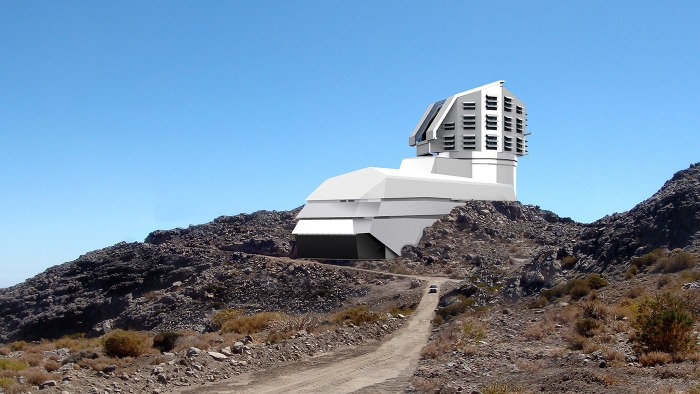
Today a group will gather in northern Chile to participate in a traditional stone-laying ceremony. The ceremony marks the beginning of construction for a telescope that will use the world’s largest digital camera to take the most thorough survey ever of the Southern sky.
The 8-meter Large Synoptic Survey Telescope will image the entire visible sky a few times each week for 10 years. It is expected to see first light in 2019 and begin full operation in 2022.
Collaborators from the US National Science Foundation, the US Department of Energy, Chile’s Ministry of Foreign Affairs and Comisión Nacional de Investigación Científica y Technológica, along with several other international public-private partners will participate in the ceremony.
“Today, we embark on an exciting moment in astronomical history,” says NSF Director France A. Córdova, an astrophysicist, in a press release. “NSF is thrilled to lead the way in funding a unique facility that has the potential to transform our knowledge of the universe.”
Equipped with a 3-billion-pixel digital camera, LSST will observe objects as they change or move, providing insight into short-lived transient events such as astronomical explosions and the orbital paths of potentially hazardous asteroids. LSST will take more than 800 panoramic images of the sky each night, allowing for detailed maps of the Milky Way and of our own solar system and charting billions of remote galaxies. Its observations will also probe the imprints of dark matter and dark energy on the evolution of the universe.
“We are very excited to see the start of the summit construction of the LSST facility,” says James Siegrist, DOE associate director of science for high-energy physics. “By collecting a unique dataset of billions of galaxies, LSST will provide multiple probes of dark energy, helping to tackle one of science’s greatest mysteries.”
NSF and DOE will share responsibilities over the lifetime of the project. The NSF, through its partnership with the Association of Universities for Research in Astronomy, will develop the site and telescope, along with the extensive data management system. It will also coordinate education and outreach efforts. DOE, through a collaboration led by its SLAC National Accelerator Laboratory, will develop the large-format camera.
In addition, the Republic of Chile will serve as project host, providing (and protecting) access to some of the darkest and clearest skies in the world over the LSST site on Cerro Pachón, a mountain peak in northern Chile. The site was chosen through an international competition due to the pristine skies, low levels of light pollution, dry climate and the robust and reliable infrastructure available in Chile.
“Chile has extraordinary natural conditions for astronomical observation, and this is once again demonstrated by the decision to build this unique telescope in Cerro Pachón,” says CONICYT President Francisco Brieva. “We are convinced that the LSST will bring important benefits for science in Chile and worldwide by opening up a new window of observation that will lead to new discoveries.”
By 2020, 70 percent of the world’s astronomical infrastructure is expected to be concentrated in Chile.

 Frascati Scienza
 Buco Nero
 Io Non Faccio Niente
 Tommaso Dorigo
 Giovanni Mazzitelli
 Barbara Gallavotti
 Keplero Blog
 Research Gate