
LHC ends 2015 with a cliffhanger
Two LHC experiments see an unexpected bump, but scientists need more data to figure out whether it's worth getting excited about.
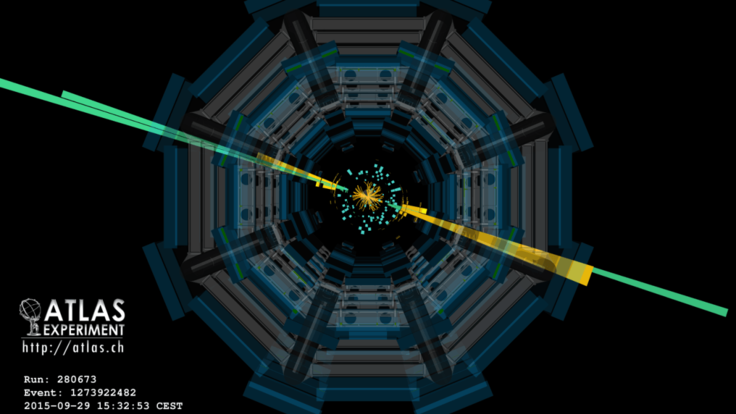
The final Large Hadron Collider results of the year are in. A new and unexpected bump in the data has left physicists on the ATLAS and CMS experiments scratching their heads as they prepare for the accelerator’s winter shutdown.
“It’s interesting because we did not expect it, and both experiments are seeing something in roughly the same place,” says Princeton professor Jim Olsen, who presented the CMS results during this week’s end-of-year seminar at CERN. “However, it’s not a discovery. It could be the first spark of a discovery, but we need more data before we know what it means—if it means anything at all.”
LHC scientists search for new particles by comparing their actual experimental data to the predictions of the Standard Model, a well vetted model detailing the fundamental processes of nature. When experimental data consistently and significantly deviates from theory, it could indicate the discovery of a new particle or process.
The latest results come from the second run of the LHC, which began colliding particles at a record energy of 13 trillion electronvolts in June.
For this analysis, both the ATLAS and CMS experiments examined thousands of pairs of photons with a shared mass above 100 billion electronvolts, or GeV. Out of all of these thousands of photon pairs, CMS saw 10 pairs and ATLAS saw 40 pairs that had a shared mass of around 750 GeV. This is slightly more than the Standard Model would predict for this mass range.
Scientists are currently exploring two possible explanations for the bump: It’s a normal statistical fluctuation and will disappear with more data, or it’s the early indication of a new particle with 750 times the mass of the proton.
If it continues to grow in size and intensity, the bump could be evidence of a heavier cousin of the Higgs boson or a graviton—the theoretical particle responsible for gravity.
“Both of these discoveries would be revolutionary because they’d be concrete evidence of particles beyond the Standard Model, something we've never seen,” says James Beacham, a postdoctoral fellow at The Ohio State University. “But the take-home message is that we need more data.”
Olsen isn’t holding his breath; bumps like this tend to come and go.
“This new data has already helped smooth out a few bumps we’ve been watching since [the first run of the LHC],” Olsen says. “For instance, by summer both the CMS and ATLAS collaborations were seeing what looked like a particle with around 2000 times the mass of the proton. But we don’t see anything in this region from our new data. We can’t rule it out yet, but it looks like that bump might be going away.”
Not all bumps disappear. Around this time four years ago, physicists saw a small one at around 125 GeV. Six more months of data collection and analysis confirmed it was evidence of a Higgs-like boson.
Luckily for scientists, the LHC is only one year into a planned four-year run. Physicists expect that they will have enough data to confirm or rule out these initial results by this time next year.
“I waited this long for the 13 TeV data,” Beacham says. “I guess I can wait a little longer.”
Festive physicists
What’s it like working on experiments over the holidays?
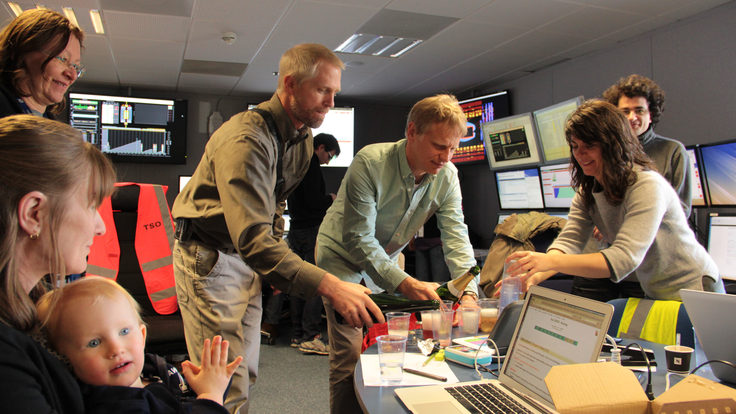
For many, the winter holiday season means a few days off, a time for family and friends and food. But for some, it means conducting massive physics experiments that don’t take time off to celebrate.
“Once you have a big device going, simply in terms of taxpayer dollars, it takes a lot of money to maintain it, even if it’s not running,” says Greg Rakness, run coordinator for the CMS experiment at the Large Hadron Collider at CERN. “So what do you do with the time you have? You run it.”
And you run the experiment whenever it’s ready to run. That’s why many physicists and technicians found themselves at CERN earlier this year over the Easter holiday. Despite the fact that Easter is a traditionally big holiday in Europe, physicists preferred to come in and work when the machine was ready for beam rather than postpone the restart.
“We like what we do here, and we know that part of the job is to have the detector up and running when the LHC has particles in the machine,” Rakness says. “How are you going to discover something new if you don’t stand up and deliver? Nature isn’t going to come give it to us. You have to go get it.”
Maintaining physics beasts
The LHC experiments do shut down over the winter holidays at CERN due to the high cost of electricity during that coldest part of the year. But the LHC itself—which is painstakingly cooled to cryogenic temperatures one sector at a time—isn’t so easy to turn back on once it is shut off. So it continues to hum along without the particles.
Technicians who volunteer to come in during break to maintain the technical infrastructure—things like ventilation, electricity, cooling systems, machine access and fire detection—arrive for work and often share a big home-cooked meal, prepared in the kitchen adjacent to the control center. Families often come in, as does a group of on-call personnel that can’t go out and do much else anyway.
“One New Year’s Eve, we managed to have so much fun that the afternoon shift stayed until the next morning,” says Jesper Nielsen, section leader of technical infrastructure who has spent the last 12 years on a Christmas or New Year’s shift.

A toast in the CMS control room on Easter Sunday
Because the accelerator is stopped, the atmosphere is more quiet and relaxed. If there’s a problem, technicians can take a bit longer to dig in and really understand what’s happening with the systems. Some of the volunteers watching the infrastructure come from other accelerator control centers, and they use this time to learn about systems they don’t normally use or to access more exotic parts of the accelerator.
Of course, with fewer people available, it can also take longer to solve problems. One Christmas, a complete power cut meant that the holiday turkey never made it in the oven. On a New Year’s Eve, the alarm system went down, and the only way to fix it was writing and updating a script every hour to reset the systems. One Christmas, they used webcams to monitor a Santa doll placed in a computer room that was experiencing flooding, checking the levels by seeing whether he remained above water.
“It’s always good fun,” Nielsen says. “The only problem with it is you’re a bit tired and haven’t seen your family when everyone else returns. You’re not synchronized with everyone else.”
Festive traditions
The amount of celebration at a shift depends, naturally, on the type of people working it. Crews working in the accelerator complex for Fermi National Accelerator Laboratory have evolved traditions such as pizza on Wednesday evenings or making breakfast around 2 a.m. on long midnight-shift weekends, and it often extends to the holidays. People bring in pie on Pi Day (March 14) and contribute to Thanksgiving potlucks and food drives.
In December, Fermilab’s control room also features a Christmas tree known as the Intensity Tree. The lights on the decorations are set up to correspond to the intensity of the beam in the Main Injector. More beam means more lights, updated in real time (every 1.33 seconds when a beam pulse travels through the machine).
“The Pre-Accelerator Department also usually puts up a tree on top of the old Cockcroft-Walton [pre-accelerator] and strings ornaments that have symbols on them representing substances that are important to source operation,” says Cindy Joe, senior accelerator operator at Fermilab.

A holiday spread in the Fermilab Main Control Room
In addition to benefiting from the festive atmosphere, hourly employees on shift earn bonus pay, and some experimental physicists earn extra points toward their shift requirements.
“Some of us, operators and experimenters, preferentially work holidays for those reasons,” Joe says, though the reasons to work a shift are many—from helping colleagues get enough time to spend with their families to pure love of the experiments. “Fermilab’s accelerators and experiments both operate continuously right through the holidays, and those of us on shift take it just as seriously as any other time.”
Even though the operator schedule is assigned months in advance, the giving spirit is in the air. A mix of preferences and willingness to trade means most people end up right where they want to be when the holidays roll around.
Best time for data
For some experiments such as the Dark Energy Survey, December offers some of the best observing time of the season, with extremely clear skies. That alone is reason for some scientists to work through the holidays.
Beyond that, “people are excited about using the instrument,” says Doug Tucker, an applications physicist who has spent many a Christmas or New Year’s observing on various telescopes, including the Dark Energy Camera in Chile. “It’s a superb instrument.”
In addition to playing with an excellent scientific toy, observers also earn credit for “infrastructure work,” which can apply toward builder status (a title within the collaboration) and personal data rights (access to information collected on the telescope, even if the observer leaves the collaboration).
There are even more perks. The cooks who work at the cafeteria on the mountain make a feast, with special cakes or watermelons carved into peacocks, and bring their families to celebrate. There are Santa hats and garlands and a fire in the fireplace, despite it being the middle of summer in Chile.
“Instead of digging out your car in Illinois, you can watch sunset with viscachas,” says Sahar Allam, astronomer on DES. Viscachas are fluffy rabbit-like creatures with long tails, and they like to hang out on the mountaintop around sundown.

Holiday on the mountaintop
As the new year strikes, sometimes observers will set the camera systems on auto and take a moment to dance and watch fireworks shows in surrounding towns below One year, the telescope operators turned on the sirens to ring in the new year. With all the food, families and festivities, perhaps celebrating the holidays from a scientific outpost isn’t so bad.
“The fun of being there and having the shift is fun enough,” Allam says. “It’s fun to do what you love.”
Physics books of 2015
A tour of 10 of this year’s popular science books delivers dark matter, black holes and a hefty dose of Einstein.
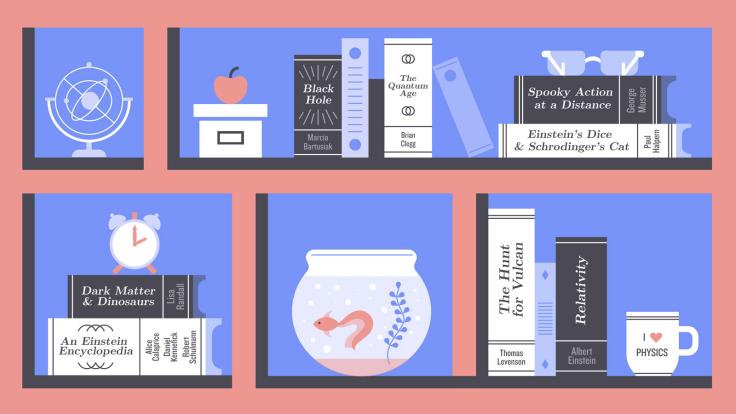
This collection of 10 recently published books will keep you up-to-date on the new and the historical in particle physics and astrophysics. Covering topics from dark matter to spooky action at a distance to the still-lamented Superconducting Super Collider, they’re all worthy additions to a popular science bookshelf.
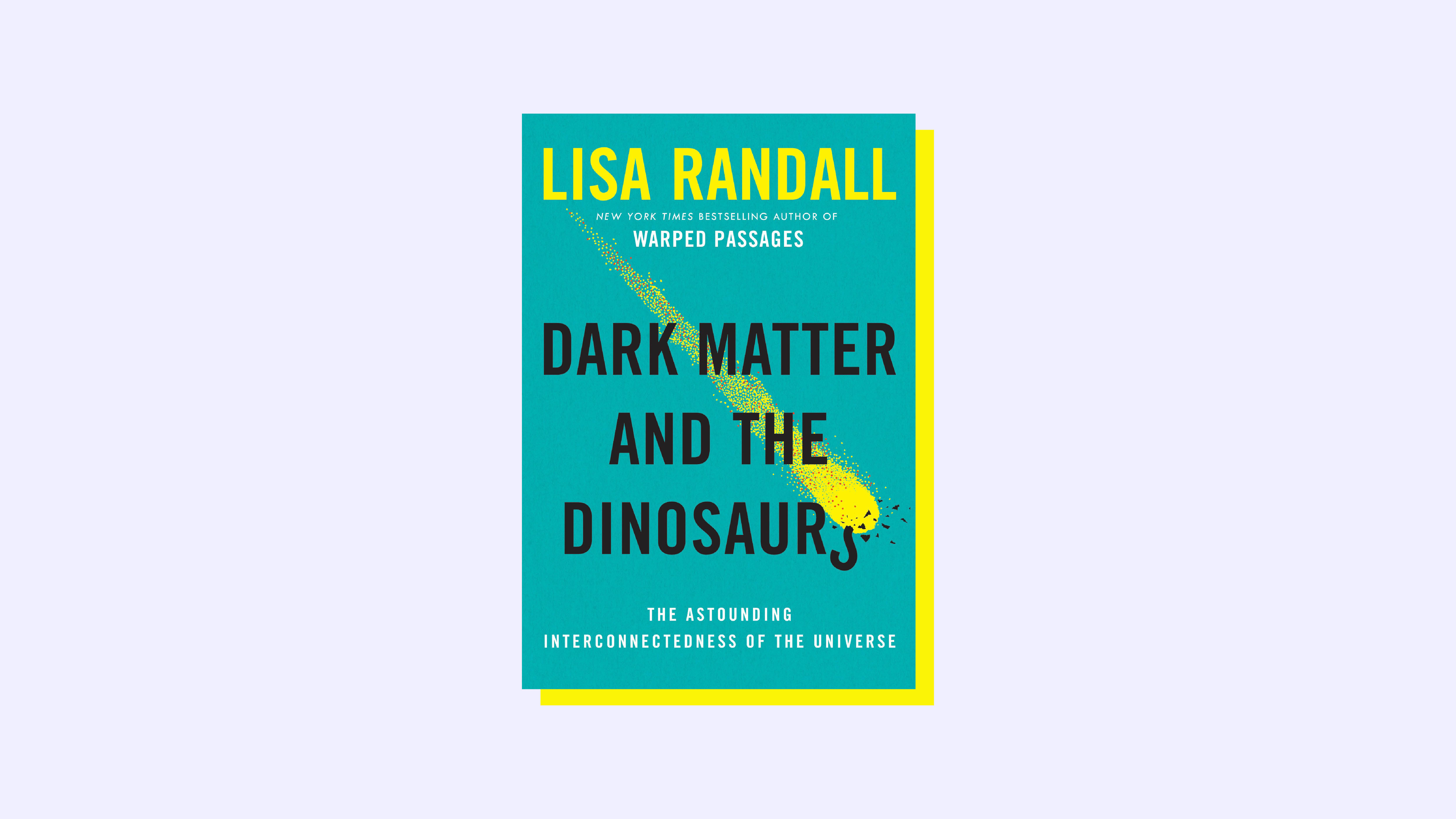
1. Dark Matter and Dinosaurs: The Astounding Interconnectedness of the Universe
Lisa Randall
Did dark matter—the invisible stuff that scientists think makes up some 27 percent of the universe—contribute to the mass extinction of the dinosaurs? Harvard theorist and best-selling author Lisa Randall asserts that it might have.
Randall theorizes that the cause of a catastrophic collision that killed off the dinosaurs and two-thirds of all living species 66 million years ago was a comet knocked from its orbit toward the Earth when the solar system passed through a disk of dark matter.
In explaining dark matter’s possible connection to the extinction event, Randall expounds on its possible properties and the challenges of studying it, asking the reader to “imagine the further challenges in understanding something that you literally cannot see.”
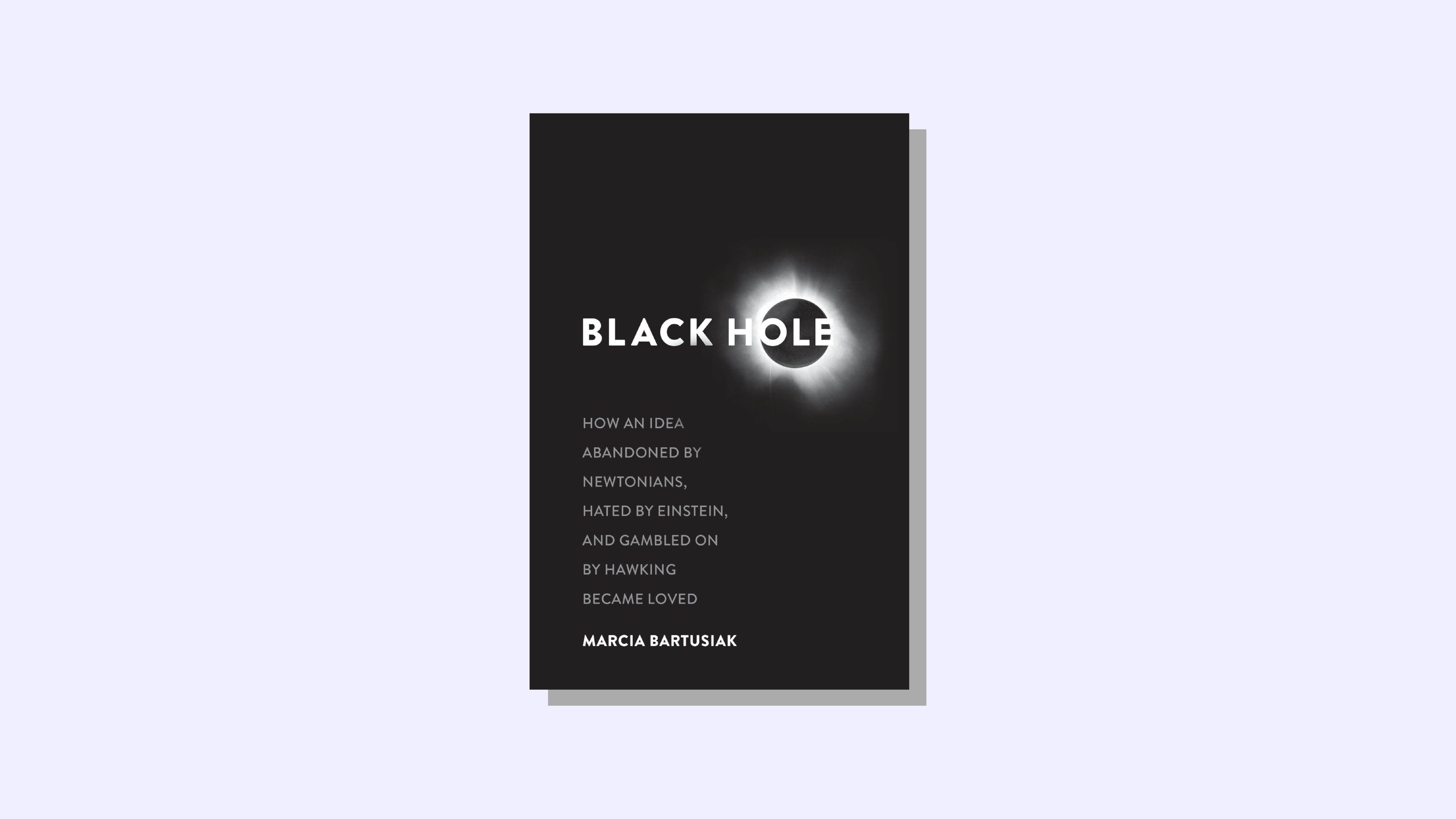
2. Black Hole: How an Idea Abandoned by Newtonians, Hated by Einstein and Gambled on by Hawking Became Loved
Marcia Bartusiak
Science writing professor Marcia Bartusiak of the Massachusetts Institute of Technology recounts heated disputes that have occurred over the existence of black holes.
She traces the idea of black holes back to a startling source—late-1700s-era English scientist John Michell. Michell envisioned that the gravitational pull of a star could be so strong that the escape velocity would exceed the speed of light and pull light particles back completely, leaving the star invisible forever.
Hundreds of years later, Einstein’s theory of general relativity provided a mathematical prediction of the existence of black holes, but even he thought they would never actually occur.
Today black holes are considered an integral element in the makeup of galaxies throughout the cosmos. As Bartusiak writes, “Nearly every fully developed galaxy appears to have a supermassive black hole at its center; it may be that the very existence of a galaxy depends on it.”
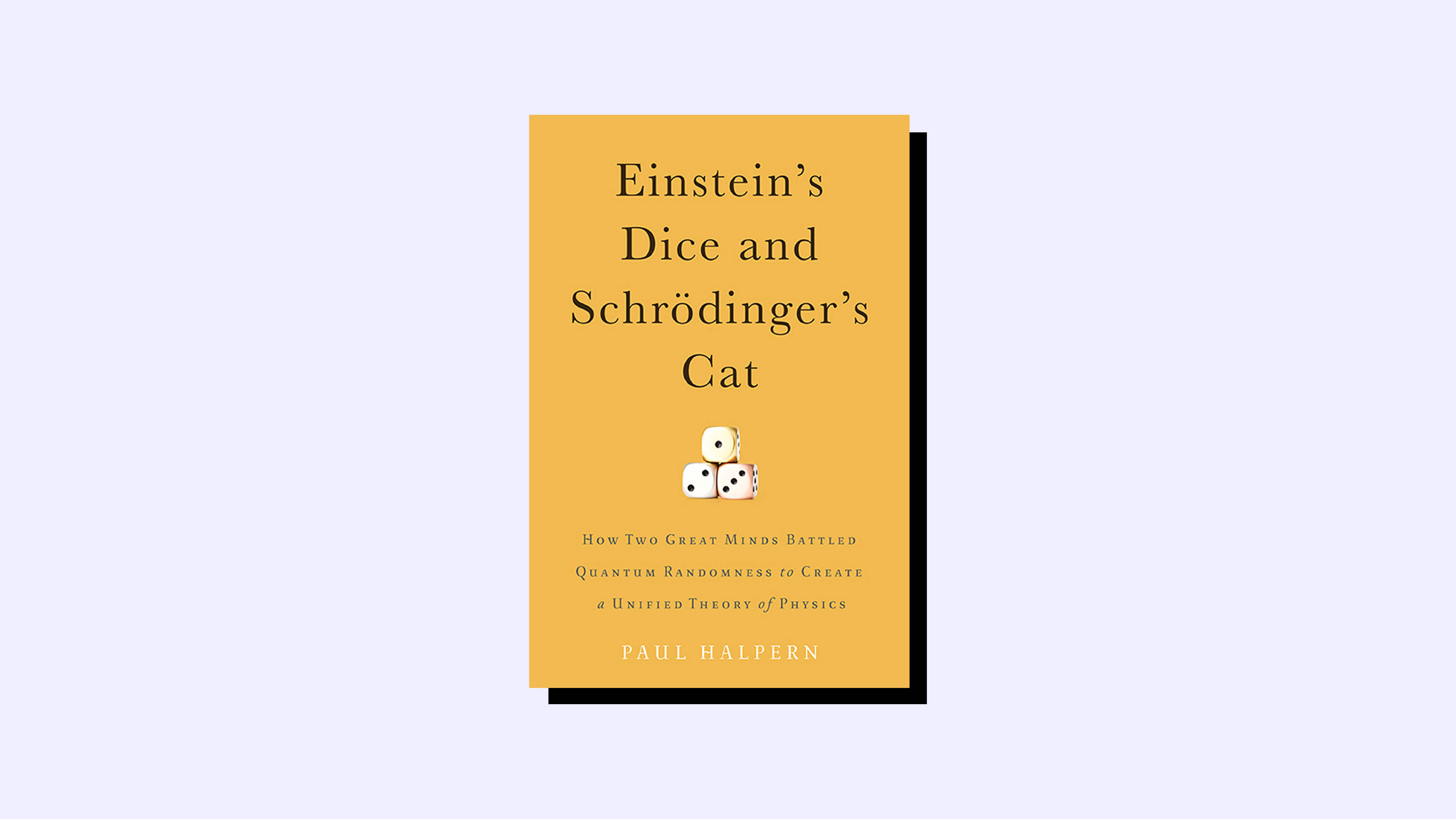
3. Einstein’s Dice and Schrodinger’s Cat: How Two Great Minds Battled Quantum Randomness to Create a Unified Theory
Paul Halpern
Attempting to dismiss the probabilistic nature of quantum theory, Albert Einstein famously said that God does not play dice with the universe. Protesting that the weirdness enabled by quantum theory was way out of bounds, Erwin Schrodinger came up with his story of the cat that was neither alive nor dead.
Together and then separately, Einstein and Schrodinger tried to come up with a Theory of Everything, a framework that would restore orderliness to the universe. They weren’t able to do it, and it bugged Einstein for the rest of his life.
In his latest book, science writer and physicist Paul Halpern writes about the scientists’ initial public feud and eventual joint quest.
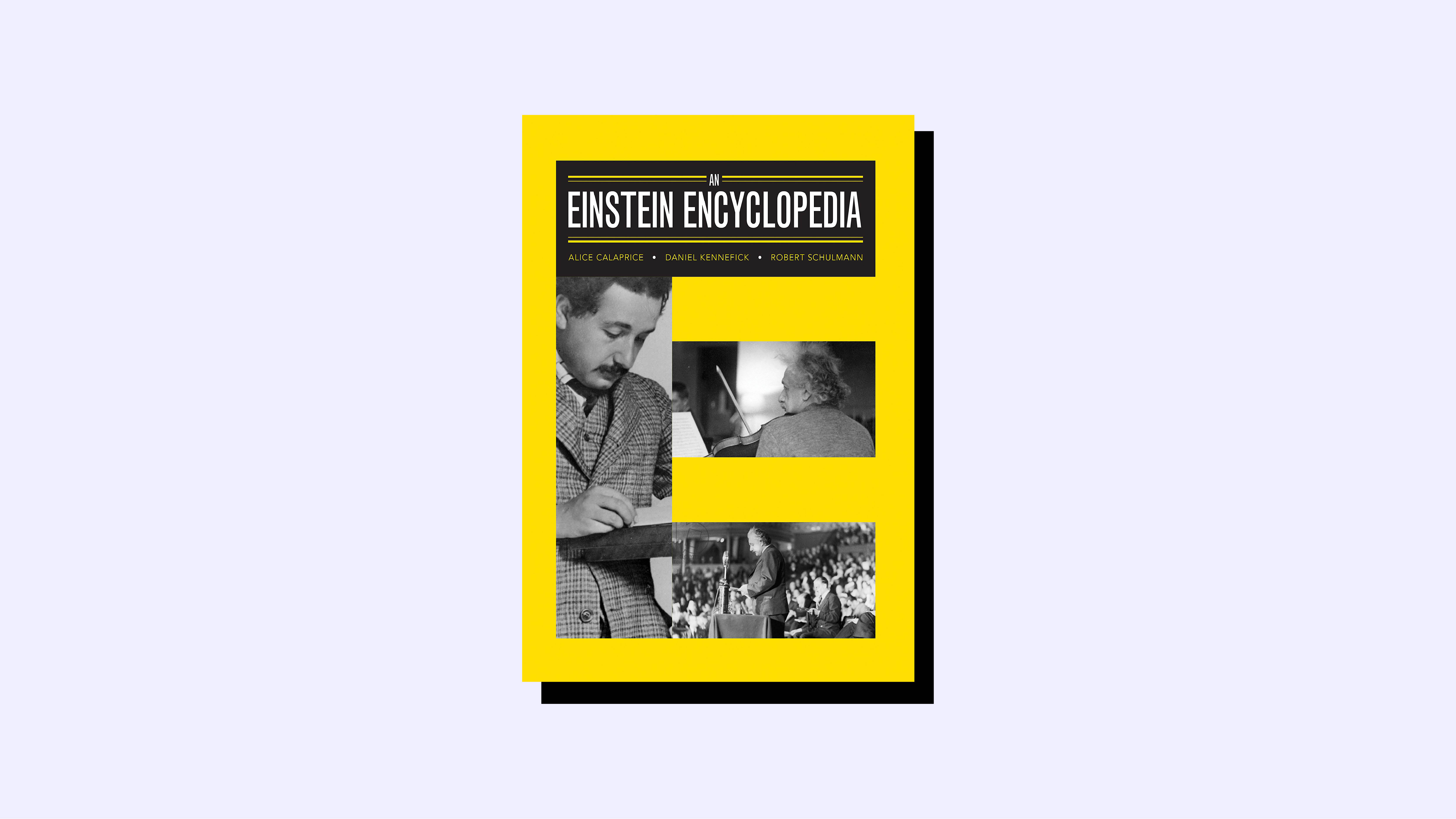
4. An Einstein Encyclopedia
Alice Calaprice, Daniel Kennefick and Robert Schulmann
Three Einstein scholars cover in exquisite detail the scientific, public and private lives of Einstein. This encyclopedia is based on information from Einstein’s archives and the Einstein Papers Project, sponsored by the Princeton University Press and the Hebrew University of Jerusalem.
The accessibility and detail make An Einstein Encyclopedia an important entry in any Einstein collection.
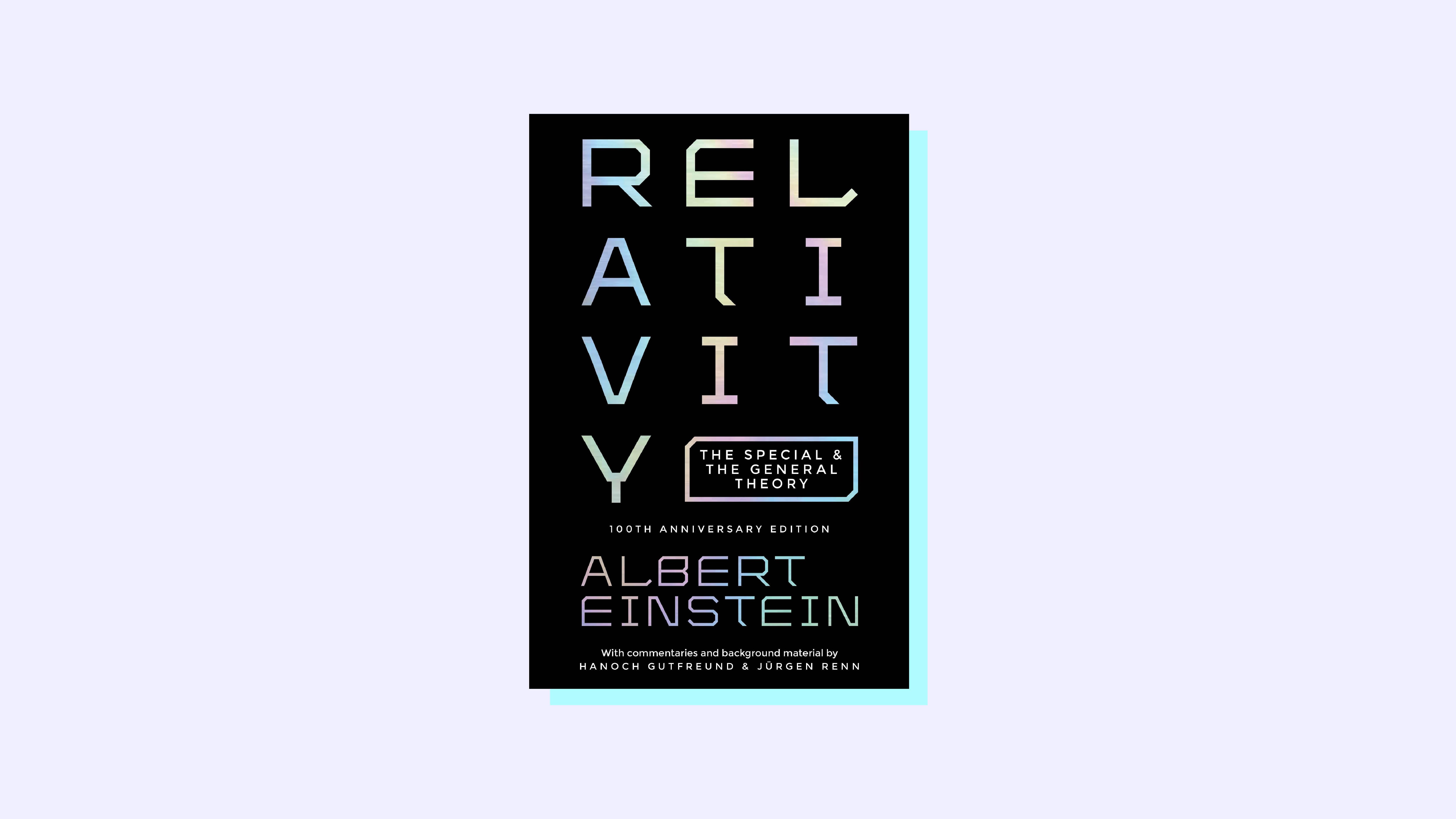
5. Relativity: The Special and General Theory, 100th Anniversary Edition
Albert Einstein
Knowing that the science of his relativity papers would be inaccessible to most, Einstein decided to provide a translation for the general public. He enlisted the best interpreter of science that he could find—himself. He described his goal: “to give an exact insight into the theory of relativity to those readers who, from a general scientific and philosophical point of view, are interested in the theory, but who are not conversant with the mathematical apparatus of theoretical physics.”
Hanoch Gutfreund, professor emeritus of theoretical physics at the Hebrew University of Jerusalem, and Jurgen Renn, director of the Max Planck Institute for the History of Science in Berlin, augment the 100th anniversary edition of this book with a reading companion to make Einstein’s thinking clearer to present-day readers.
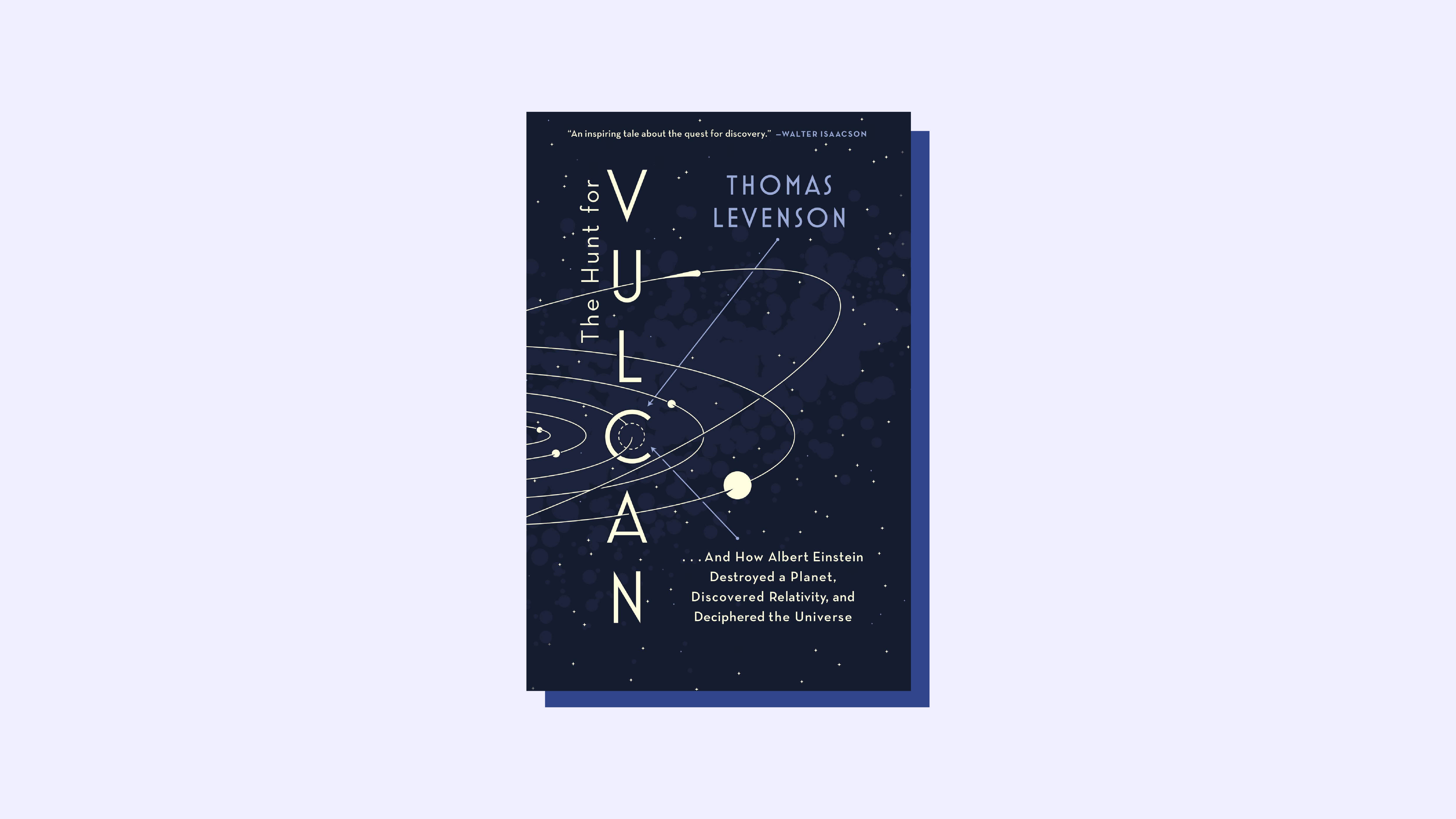
6. The Hunt for Vulcan: How Albert Einstein Destroyed a Planet, Discovered Relativity, and Deciphered the Universe
Thomas Levenson
In the 19th century, the odd, constantly shifting orbit of Mercury spawned countless theories that it was under the gravitational influence of another, undiscovered planet. This planet came to be called Vulcan. Its existence seemed to be predicted by Newton’s laws of gravitation and Kepler’s laws of planetary motion. But for more than 50 years, nobody could find it.
As Thomas Levenson, head of the graduate science-writing program at MIT, explains, the search was thwarted by one thing: Vulcan didn’t exist. The mystery of Vulcan persisted until Einstein explained the motions of Mercury with his general theory of relativity.
7. Spooky Action at a Distance: The Phenomenon That Reimagines Space and Time—and What It Means for Black Holes, the Big Bang, and Theories of Everything
George Musser
Einstein derisively called it “spooky action at a distance”: the theory that two entangled particles can affect each other instantly, even when separated by long distances.
Entanglement experiments have been going on since the 1970s. In the last few years, reports of varying reliability have claimed the observation of entanglement ranging from just under a mile to as far as 89 miles.
George Musser, also author of The Complete Idiot’s Guide to String Theory, explains how these experiments and more have developed our understanding of space, time and the universe.
8. The Quantum Age: How the Physics of the Very Small has Transformed Our Lives
Brian Clegg
Popular science writer Brian Clegg declares that “around 35 percent of GDP in advanced countries comes from technology that makes use of quantum physics in an active fashion, not just in the atoms that make it up.” Quantum physics may be difficult to understand, but it is all around us, in transistors, personal computers and Blu-ray players.
And it’s doing some amazing things. The National Institute of Standards and Technology has built a quantum-logic clock estimated to lose or gain a second every 3.7 billion years. Researchers are hard at work on quantum computers that will eventually be able to carry out many calculations at the same time.
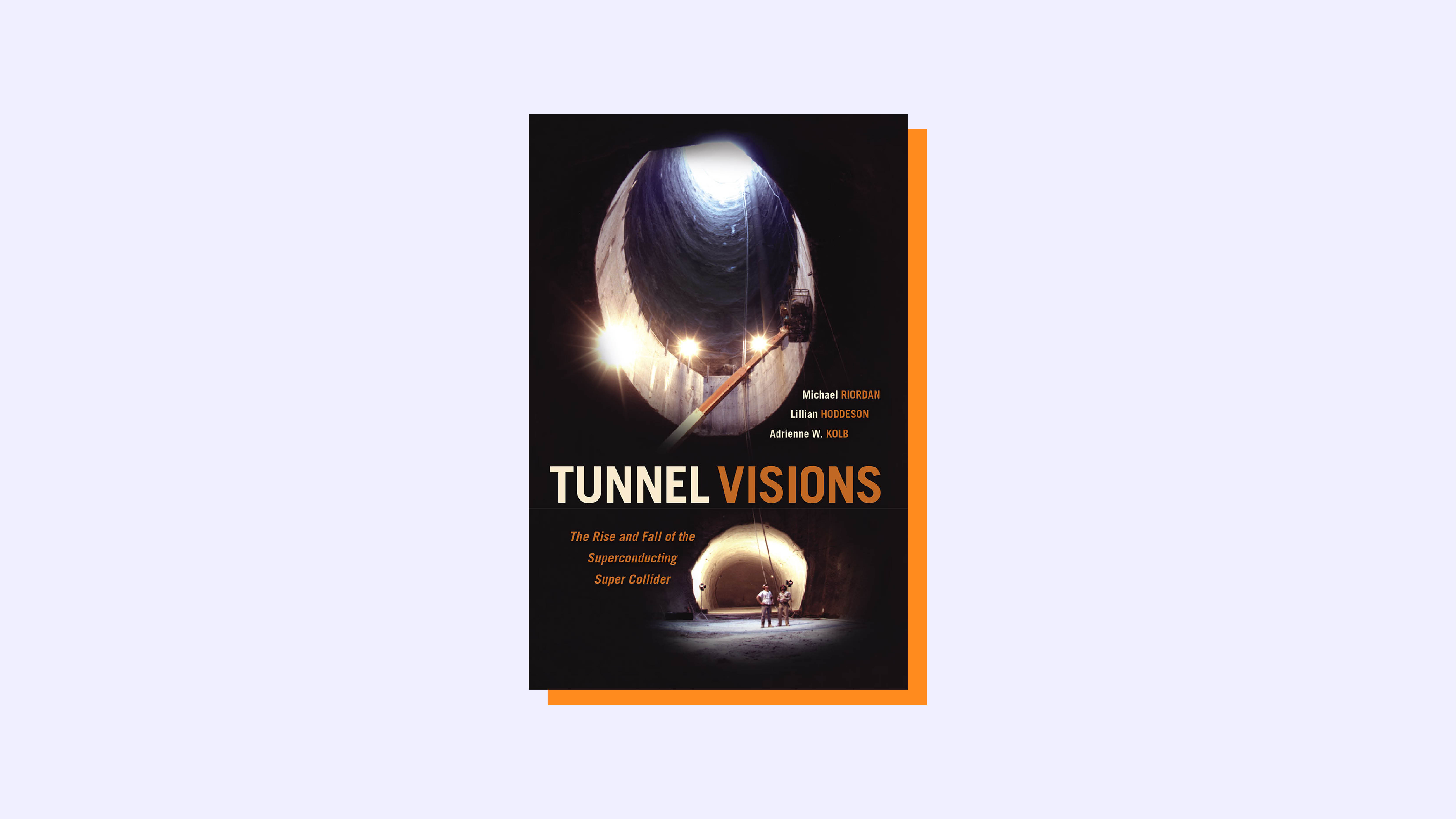
9. Tunnel Visions: The Rise and Fall of the Superconducting Super Collider
Michael Riordan, Lillian Hoddeson and Adrienne W. Kolb
From dream to nightmare to bitter memory: The Superconducting Super Collider refuses to vacate the consciousness of American particle physicists after more than 25 years. The SSC was designed to run at 20 times the energy of any particle accelerator ever built. But a decade after its construction began in Texas in 1983, the project was canceled.
Physicist and author Michael Riordan, formerly of SLAC National Accelerator Laboratory; science historian Lillian Hoddeson; and archivist Adrienne W. Kolb, formerly of Fermi National Accelerator Laboratory, trace the money woes, project management difficulties and other pitfalls that doomed the giant machine.
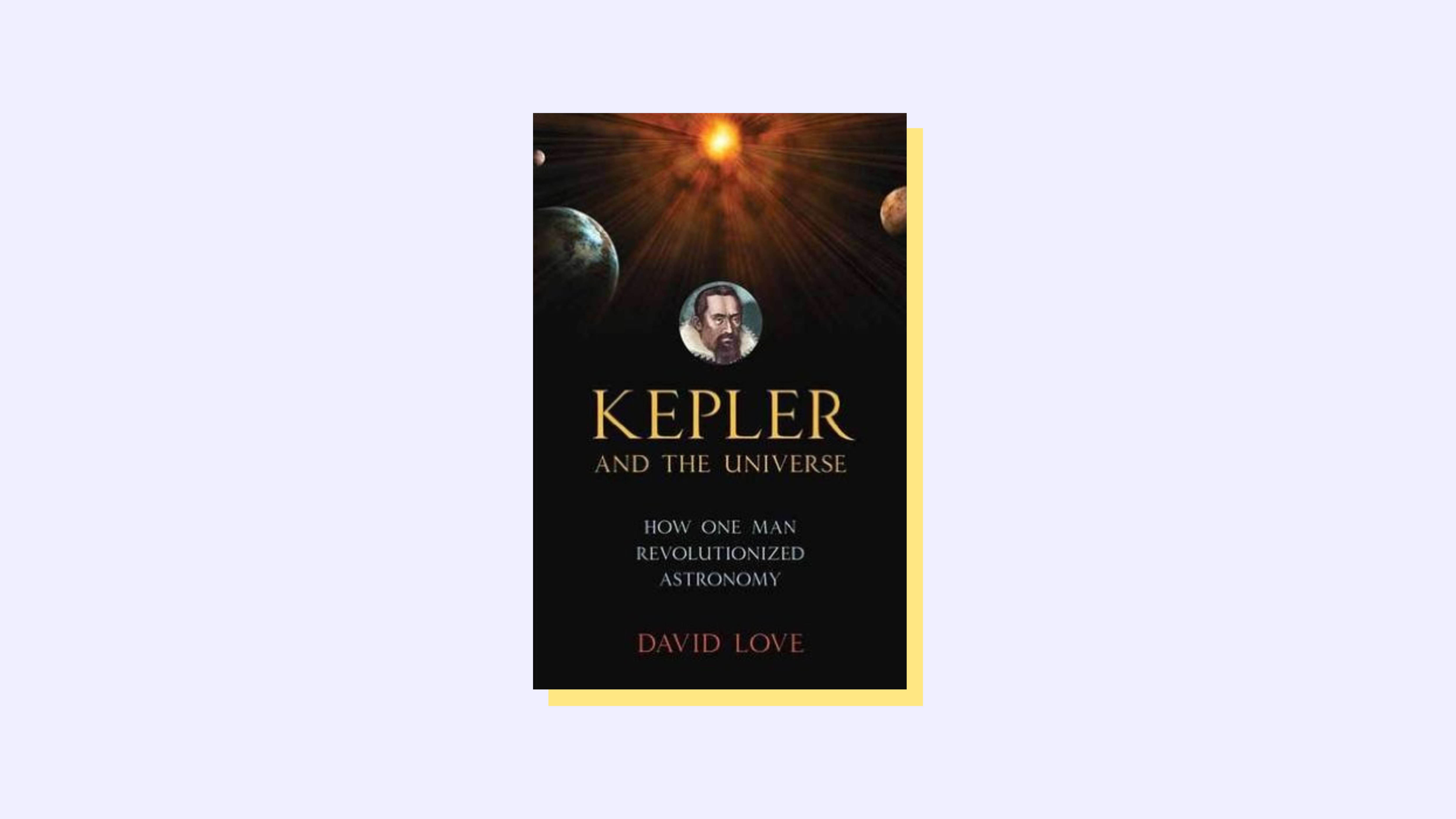
10. Kepler and the Universe: How One Man Revolutionized Astronomy
David K. Love
Johannes Kepler’s life was defined by tragedy. His first wife died young. Over his lifetime, eight of his 12 children died of illnesses at young ages. His mother narrowly escaped being executed as a witch. Yet through it all, he managed to build the foundation for modern astronomy.
Kepler confirmed the Copernican construct of a sun-centered solar system. He was the first to define the sun as the emitter of a force that kept the planets in their orbits. He proved that those orbits were not circular, but elliptical. And his three laws of planetary motion, based on the geometry of the ellipse with the sun at one of its foci, remain the standard of space science today.
In this book, author David K. Love, a member of the Royal Astronomical Society, places Kepler on the same level as greats such as Copernicus, Galileo, Brahe and Newton, “as one of the key founders of the scientific revolution.”
Photowalk winners announced
An international jury and more than 3800 public votes determined the winners of this year's Global Physics Photowalk competition.
In September, eight research laboratories invited more than 200 photographers to go behind-the-scenes and capture the beauty of physics as part of the 2015 Global Physics Photowalk.
From thousands of submissions, each laboratory chose a shortlist of photos for the competition. An international panel of artists, photographers and scientists scrutinized the photos to crown winners in the Jury Category. A public, online vote determined winners in the People's Choice Category.
Photographs will be featured as part of a traveling exhibit across laboratories in Australia, Asia, Europe and North America.
Jury's Choice: 1st Place, Katy Mackenzie
First place in the Jury Category went to Katy Mackenzie for her photograph of the Main Control Room at TRIUMF laboratory in Canada. For the Vancouver-based mortgage broker and hobbyist photographer, the photo brings back memories of visiting her father on the job over 30 years ago.
“My father worked at TRIUMF,” Mackenzie says. “I have vivid memories of sitting on the floor of the Control Room watching him work. I was too young to tell time and imagined the clock was a countdown to some super secret mission launch.”
The photograph speaks to the human experience and everyday qualities of work, science and technology, says juror Robert Bean, an artist, writer and professor at Nova Scotia University of Art and Design University in Canada. “The mix of analog and digital technologies is indicative of how scientific knowledge emerges from the hybridity of things. Alexander Graham Bell would approve.”
Jury's Choice: 2nd Place, Mark Killmer
Jurors awarded second place to Mark Killmer for his photograph of a temporary laboratory set up at Stawell Underground Physics Laboratory in the Stawell Gold Mine in Victoria, Australia.
“This photo serves as a fitting reminder that much science still involves people getting their hands dirty,” says juror Joe Hanson, a biologist, science writer and the creator and host of PBS Digital Studios’ science education series It’s Okay To Be Smart.
Jury's Choice: 3rd Place, Robert Hradil
Third place went to Robert Hradil for his photo, “The Incredibles.” The photo, taken in a restaurant at CERN laboratory in Europe, captures the transmission of knowledge between generations.
“Humanity is a collective process,” says juror Jan Peters, a documentary filmmaker from Berlin. “There is a need of transferring ideas to make and create the world we live in.”
People's Choice: 1st Place, Molly Patton
First place in the popular vote was awarded to Molly Patton for her photograph of an electric mining drill at Stawell Underground Physics Laboratory. Patton says she was inspired by the environment as it “lights the way for dark matter detection and future particle physics research.”
People's Choice: 2nd Place, Pietromassimo Pasqui
Second place went to Pietromassimo Pasqui for his photograph of a vacuum chamber and mirror carrying a laser beam for the SPARC accelerator at INFN National Laboratory of Frascati, Italy.
“Of all the magnificent images of technological apparatus, this image excelled,” juror Bean says. “It is visually alluring and descriptive. The viewer is invited to speculate on whether it is an actual site or a still from a contemporary science fiction film.”
People's Choice: 3rd Place, Rosemary Wilson
The popular vote awarded third place to Rosemary Wilson for her photograph of a detector wire chamber that took data at the HERA collider from 1992 to 2007 at DESY laboratory in Hamburg, Germany.
“This is an inherently beautiful image, strongly composed and skillfully photographed,” says juror Yael Fitzpatrick, design and branding manager at the American Geophysical Union and former art director for Science. “It feels highly technical but also quite simply beautiful, an aesthetically pleasing image.”
LUX maps where dark matter isn’t
The LUX experiment has drawn the best picture yet of what dark matter particles cannot be.
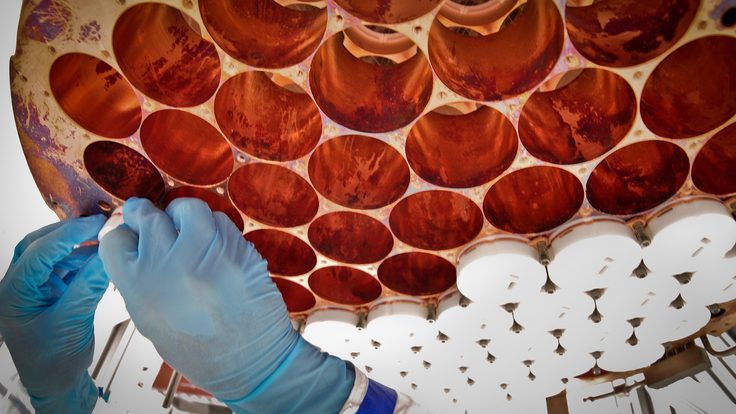
The Large Underground Xenon dark matter experiment, which operates nearly a mile underground at the Sanford Underground Research Facility in the Black Hills of South Dakota, has already proven itself to be the most sensitive dark matter detector in the world. Now scientists have significantly enhanced its ability to look for WIMPs, or weakly interacting massive particles, which are among the leading candidates for dark matter.
The new research, which re-examines data collected during LUX’s first run in 2013, helps to rule out the possibility of dark matter detections at low-mass ranges, where other experiments had previously reported potential hints of dark matter. It is described in a paper submitted to Physical Review Letters.
“We have long thought that LUX should have good sensitivity to low-mass WIMPs, but only with this new analysis are we for the first time fully taking advantage of that,” says LUX co-founder Tom Shutt of the Department of Energy’s SLAC National Accelerator Laboratory.
Searching for dark matter deep underground
Dark matter is thought to be the dominant form of matter in the universe. Scientists know it exists because its gravity affects the way galaxies rotate and the way light bends as it travels through the universe. WIMPs are thought to interact with other matter only on very rare occasions; they have so far evaded detection.
LUX consists of one-third of a ton of liquid xenon surrounded by sensitive light detectors and is designed to detect collisions of dark matter particles with xenon atoms. When this happens, the xenon will recoil and emit a faint flash of light, which is detected by the light sensors. The detector’s location at Sanford Lab beneath a mile of rock helps to shield it from cosmic rays and other radiation that would interfere with a dark matter signal.
LUX has yet to detect a dark matter signal, but its exquisite sensitivity has allowed scientists to rule out a vast range of properties WIMPs could have potentially had. New calibration techniques described in the paper increase that sensitivity even further, particularly for low WIMP masses.
Making the search more sensitive
LUX scientists calibrated their detector using neutrons as stand-ins for dark matter particles. Bouncing neutrons off the xenon atoms allows scientists to quantify how the LUX detector responds to the recoiling process.
By temporarily injecting radioactive gases into the detector, LUX scientists also calibrated the detector response to the deposition of small amounts of energy by struck atomic electrons.
“It is vital that we continue to push the capabilities of our detector in the search for the elusive dark matter particles,” says LUX co-spokesperson Rick Gaitskell of Brown University.
At SLAC, Tomasz Biesiadzinski helped develop tools to better quantify signals from the light sensors, making measurements of events in the LUX detector more accurate. Wing To co-led the statistical sensitivity and limits analysis, which allows scientists to exclude various WIMP models with the LUX data.
These improvements, coupled with advanced computer simulations at Lawrence Berkeley National Laboratory and Brown University, allowed scientists to test additional particle models of dark matter that can now be excluded from the search.
“[LUX scientists] have done really important work understanding their calibration at their lowest energies,” says University of Minnesota physicist Priscilla Cushman of the SuperCDMS dark matter experiment. “In the areas in which [LUX and SuperCDMS] overlap, it's important that we have complementary targets. We're all in this business together, so we're very happy they have extended their reach.”
Preparing for future searches
The latest run began in late 2014 and is expected to continue until June 2016. “We will be very excited to see if any dark matter particles have shown themselves in the new data,” says LUX co-spokesperson Dan McKinsey of the University of California, Berkeley.
Planning for the next-generation dark matter experiment at Sanford Lab is already underway. In late 2016, LUX will be decommissioned to make way for the much larger xenon detector of the LUX-ZEPLIN, or LZ, experiment, which will be filled with 10 tons of liquid xenon, three times the volume used for LUX.
“All of LZ’s xenon will be purified at SLAC,” says Dan Akerib, who leads SLAC’s LZ team with Shutt. “We’re working on a purification system that will be 20 times faster and produce 100 times purer liquid xenon than the one used for LUX.”
In addition, SLAC has begun assembling a prototype for the LZ detector, which will be 100 times more sensitive to elusive WIMPs compared to LUX.
The LUX scientific collaboration, which is supported by the DOE and National Science Foundation, includes 19 research universities and national laboratories in the United States, the United Kingdom and Portugal.
The next gamma-ray eye on the sky
Scientists have successfully tested the first prototype camera for the Cherenkov Telescope Array.
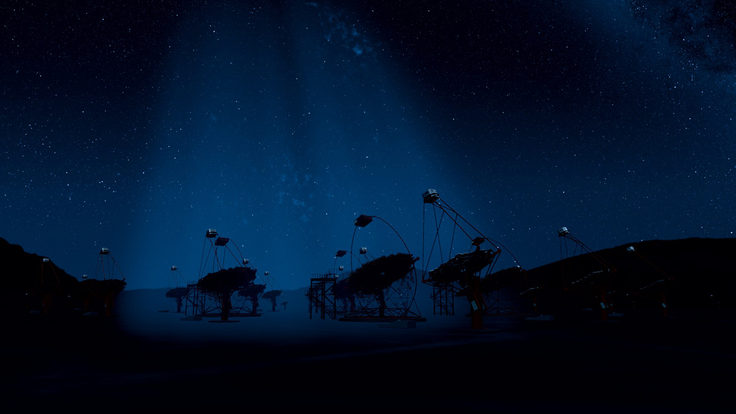
Telescope arrays VERITAS, HESS and MAGIC have spied active supermassive black holes, the remnants of the explosions of massive stars, binary star systems, and galaxies actively churning out new stars.
This is possible thanks to what all of these cosmic objects have in common: They are all sources of high-energy gamma rays. VERITAS, HESS and MAGIC all look for the optical light produced when those gamma rays interact with Earth’s atmosphere.
One gamma-ray source that continues to elude these powerful telescopes is the brightest electromagnetic event known to occur in the universe: a gamma-ray burst. But a new telescope array currently under development might be able to catch one.
The Cherenkov Telescope Array, or CTA, will cover a substantially larger area on the ground, making it an enormous “bucket” to collect incoming gamma-ray-produced radiation. It will also be able to collect data during almost twice as many hours per year as current arrays.
The array will study the entire range of gamma-ray sources. It also has the capability to detect the annihilation signature of dark matter particles.
“We’re really hoping to find something new, some new type of high-energy astrophysical phenomenon,” says Rene Ong, the CTA consortium co-spokesperson.
Scientists successfully operated the first CTA prototype camera in late November. The full array is scheduled to start running in the 2020s.
The usefulness of gamma rays
Gamma rays are almost ideal messengers of high-energy particle astrophysics. They are created in the most energetic processes in the universe. And, like all other forms of light, they are electrically neutral and thus aren’t buffeted by galactic magnetic fields as they travel through space. This means scientists can use them to point back to their sources.
The drawback is that these messengers can’t make it through Earth’s atmosphere. Instead, they interact and produce a shower of lower-energy particles.
If some of those are traveling at a velocity faster than the speed of light in the gaseous medium of the atmosphere, they will create flashes of light peaking between blue and ultraviolet, akin to a sonic boom following a supersonic jet. This light is called Cherenkov radiation, and it’s what ground-based high-energy gamma-ray telescopes actually detect.
VERITAS in Arizona, HESS in Namibia, and MAGIC on the Canary island of La Palma are arrays of optical telescopes that have been detecting this light for about a decade. VERITAS contains four of these scopes, HESS has five, and MAGIC has two. The weak light reflects off each segmented primary mirror and is funneled to a “camera.” Each telescope’s camera is made of hundreds to thousands of photomultiplier tubes which convert the incoming photons into electrical signals.
With the next-generation CTA, scientists hope to catch a gamma-ray burst with a ground-based telescope array for the first time. They want to know the underlying physics of these blasts, the sources of which are thought to be located millions to billions of light-years away.
Scientists have seen gamma-ray bursts with space-based instruments, such as the Fermi Gamma-Ray Space Telescope and Swift. But only a ground-based array could detect their highest-energy gamma rays, those above 100 billion electronvolts. And a large ground-based array such as the CTA, which will cover 10 square kilometers in the south and 1 square kilometer in the north, would be able to capture much more information.
Building the CTA
An international consortium of nearly 1300 researchers from 31 countries is working toward building the CTA. The array will focus on a wider gamma ray energy range than the currently operating instruments—seeing between 20 billion electronvolts and 300 trillion electronvolts—and will do so with 10 times the sensitivity.
The CTA will consist of two detection sites on Earth, one in each hemisphere. At Cerro Paranal in Chile's Atacama Desert, approximately 100 telescopes spread across an area of about 10 square kilometers will scan the Southern sky. On the Spanish island of La Palma, some 19 telescopes will watch the Northern sky. The CTA Observatory is in the final negotiations with representatives from both locations to finalize the agreements to host the arrays.
Both the northern and southern arrays will each have four large telescopes, each 23 meters wide and spaced about 100 meters apart from one another, clustered toward the center of the array. Moving outward will be telescopes in the 10 to 12 meters range. The northern array will have 15 of these medium-sized telescopes, while the southern array will have 25. The Cerro Paranal location additionally will host approximately 70 4-meter-wide telescopes, farther out from the array’s center.
The 70 small telescopes will use new detectors made of silicon. These have several advantages over the current design, says University of Oxford graduate student Andrea De Franco, “but the most sexy for us is they can resist bright night-sky background.”
That means they can detect Cherenkov light even in bright moonlight, something VERITAS, HESS and MAGIC cannot do. This new technology will let the CTA observatory operate for about 16 to 17 percent of the hours in a year; current arrays can observe during only about 10 percent.
Work in progress
CTA is in the development phase right now, meaning the consortium members are developing and testing the hardware, verifying how to deploy and operate the instruments, and simulating the best layout of those telescopes at each site.
In October, the CTA project began constructing the large telescope prototype at La Palma.
Two medium-sized telescope prototypes are also under construction: A two-mirror design with a 10-meter primary mirror is being built in southern Arizona; a prototype of a single-mirror, 12-meter-wide design is in testing in Berlin, and its camera is nearly complete.
All three small-sized prototypes are well underway. A single-mirror, 4-meter design has been constructed in Krakow, Poland; a two-mirror, 4-meter design is operational near Mount Etna, Italy; and another two-mirror, 4-meter design was just inaugurated December 1 outside of Paris.
De Franco has spent the last two years building and testing the camera for the Paris-based prototype in addition to helping commission it before the inauguration. On November 26, he and his colleagues proved the design was working—even with the City of Light nearby. The camera recorded Cherenkov light, making it the first CTA prototype fully working and observing.
De Franco says it’s more likely that the light was part of a particle shower caused by an incoming cosmic ray rather than a gamma ray. But even if it was, this detection marked yet another step forward along the path to build science’s next gamma-ray eye scouring the sky.
The next step will be to construct and deploy the pre-production telescopes at the actual array sites.
“Ideally, [each of these] is identical to the final production telescope,” says CTA Project Manager Christopher Townsley. “It’s just that we will always learn something from putting it in the desert.”
Members of the CTA project expect to begin this phase in spring 2017, depending on the availability of funding.
Once the pre-production telescopes are operational, data collection can begin, though it won’t be anywhere near the quality expected from the full observatory. According to the current timeline, most of the telescopes at both arrays will be complete in 2020 or 2021.
At that point, the data will surpass what today’s best gamma-ray instruments can obtain. And CTA will only get better from there.
Save the particles
To learn more about the particles they collide, physicists turn their attention to a less destructive type of collision in the LHC.
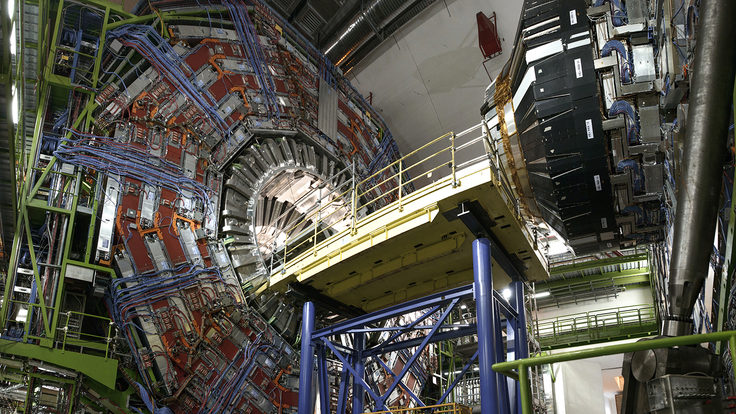
Every second, the Large Hadron Collider generates millions of particle collisions. Scientists watching these interactions usually look out for only the most spectacular ones.
But recently they’ve also taken an interest in some gentler moments, during which the accelerated particles interact with photons, quanta of light.
When charged particles—like the protons the LHC usually collides or the lead ions it is colliding right now—are forced around bends in an accelerator, they lose energy in the form of light radiation.
Originally, physicists perceived this photon leak as a nuisance. But today, laboratories around the world specifically build accelerators to produce it. They can use this high-energy light to take high-speed images of materials and processes in the tiniest detail.
Scientists are now using the LHC as a kind of light source to figure out what’s going on inside the protons and ions they collide.
The LHC’s accelerated particles are chock-full of energy. When protons collide—or, more specifically, when the quarks and gluons that make up protons interact—their energy is converted into mass with manifests as other particles, such as Higgs bosons.
Those particles decay back into energy as they sail through particle detectors set up around the collision points, leaving their signatures behind. Physicists usually study these particles, the ones created in collisions.
In proton-photon collisions, however, they can study the protons themselves. That’s because photons can traverse a particle’s core without rupturing its structure. They pass harmlessly through the proton, creating new particles along the way.
“When a high-energy light wave hits a proton, it produces particles—all kinds of particles—without breaking the proton,” says Daniel Tapia Takaki, an assistant professor at the University of Kansas who is a part of the CMS collaboration. “These particles are recorded by our detector and allow us to reconstruct an unprecedentedly high-quality picture of what’s inside.”
Tapia Takaki is interested in using these photon-induced interactions to study the density of gluons inside high-energy protons and nuclei.
As a proton is accelerated to close to the speed of light, its gluons swell and eventually split—like cells dividing in an embryo. Scientists want to know: Just how packed are gluons inside these protons? And what can that tell us about what happens when they collide?
The Standard Model—a well-vetted model that predicts the properties of subatomic particles—predicts that the density of gluons inside a proton is directly related to the likelihood a proton will spit out a pair of charm quarks in the form of a J/psi particle during a proton-photon interaction.
“So by measuring the J/psi’s production rate very precisely, we can automatically have access to the density of gluons,” Tapia Takaki says.
Prior to joining the CMS experiment, Tapia Takaki worked with colleagues on the ALICE experiment to conduct a similar study of photon-lead interactions. Tapia Takaki plans to study the lead ions currently being collided in the LHC in more detail with his current team.
The trickiest part of these studies isn’t applying the equation, but identifying the collisions, Tapia Takaki says.
To identify subtle proton-photon and photon-lead collisions, Tapia Takaki and his colleagues must carefully program their experiments to cherry-pick and record events in which there’s no evidence of protons colliding—yet there is still evidence of the production of low-energy particles.
“It’s challenging because the interactions of light with protons or lead ions take place all the time,” Tapia Takaki says. “We had to find a way to record these events without overloading the detector’s bandwidth.”
Fermilab brings in new artist-in-residence
Chicago innovator Ellen Sandor will create new works based on her experiences at Fermi National Accelerator Laboratory.
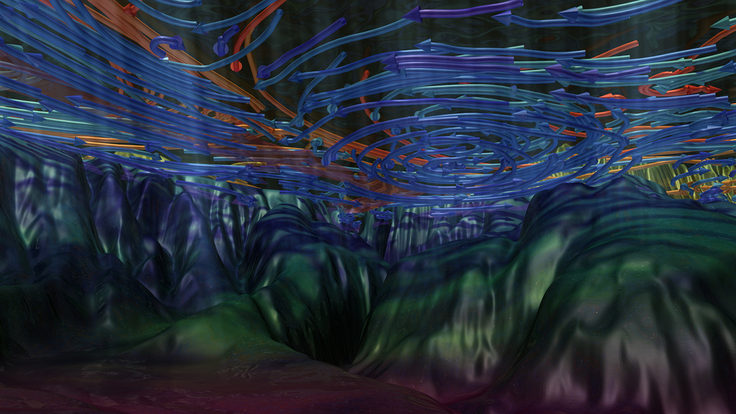
Chicago artist Ellen Sandor, founder and director of the collaborative artists group (art)n, will be Fermi National Accelerator Laboratory’s artist-in-residence for 2016.
Sandor has spent her 40-year career visualizing the invisible using a unique combination of tools and materials. For the next year, Sandor will spend time with researchers at Fermilab—who use massive instruments to visualize invisible subatomic particles—and will create several new works inspired by the science happening at the suburban Chicago laboratory, using the latest new media technology.
“My goal, as always, is to create pieces that are scientifically correct as well as classically beautiful as a work of art,” Sandor says. “I’m excited to get started.”
Sandor is perhaps best known as the inventor of a new artistic medium called PHSColograms. These three-dimensional pieces combine photography, holography, sculpture and computer graphics to create immersive experiences. Sandor and her team of collaborators have used this patented process to visualize everything from the Ebola virus to architectural renderings of buildings that were planned but never constructed.
Sandor’s early work with PHSColograms was on display at Fermilab’s art gallery in 1987. Included in that show was Sandor’s 3-D portrait of the AIDS virus, one of the first attempts to scientifically visualize the organism behind the disease. The gallery also features a piece by Sandor’s long-time friend, the late Martyl Langsdorf, on permanent display.
“I visited the laboratory in the 1980s with Martyl and since then have been reading about the wonderful things happening there,” Sandor says. “It will be an honor for me to work with the scientists at Fermilab, who are truly rock stars.”
Fermilab’s artist-in-residence program was inaugurated in 2014 and offers artists a chance to create work based on Fermilab’s experiments and research. Artists interview scientists, tour research areas of the facility and create new works based on what they learn. They then serve as an ambassador to the arts community, inviting them to look at the science of particle physics from a new, more resonant perspective.
Oak Park artist Lindsay Olson will wrap up her term as the laboratory’s 2015 artist-in-residence in December. Olson, who works in a variety of artistic media, produced more than a dozen new works inspired by Fermilab’s science, some of which can be seen online.
“We’re very pleased to have Ellen Sandor on board to continue our artist-in-residence program,” says Georgia Schwender, curator of the Fermilab Art Gallery. “This program offers people another way to understand physics, through the eyes of artists who can interpret Fermilab’s science in compelling ways.”
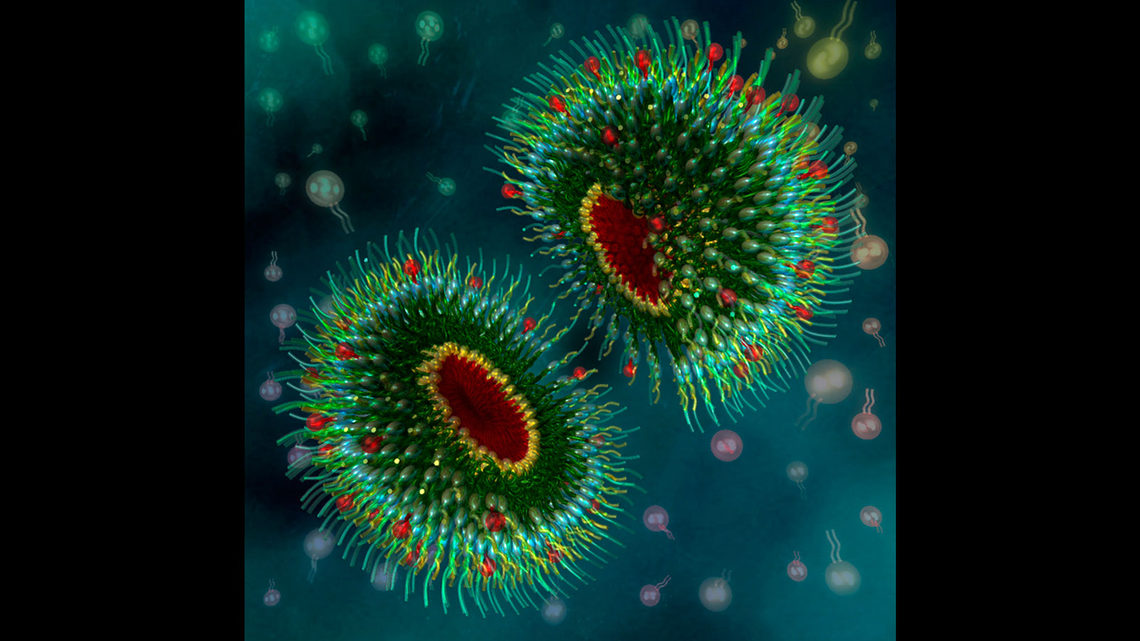
Ellen Sandor, Chris Kemp, and Diana Torres, (art)n
Matthew Tirrell, Pritzker Director of the Institute for Molecular Engineering (IME), University of Chicago
Peter Allen, Scientific Visualization Director, UC Santa Barbara
30”x30” PHSCologram: Duratrans, Kodalith, Plexiglas
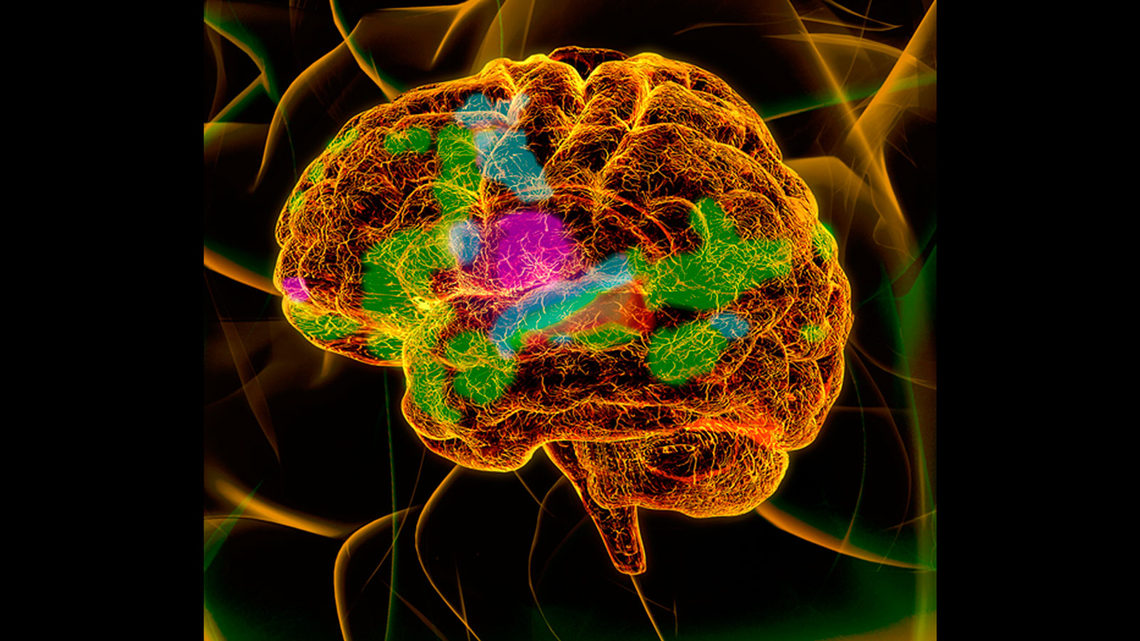
Ellen Sandor, Chris Kemp, Michael Cone, and Janine Fron, (art)n
Raun K. Kaufman, Autism Treatment Center of America: The Son-Rise Program
Cynthia K. Thompson, Sladjana Lukic, Bharath Chandrasekaran, Joan Chiao, and Patrick Wong, Northwestern University
Special thanks to Penya Sandor and Eric Taub 30”x30” PHSCologram: Duratrans, Kodalith, Plexiglas
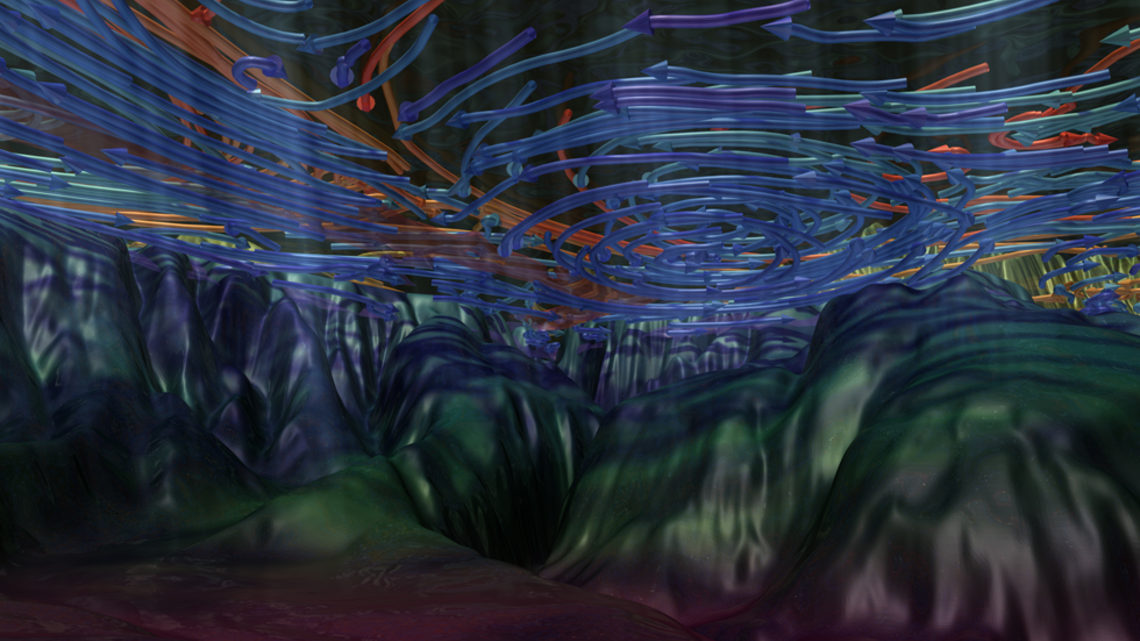
Ellen Sandor, Chris Kemp and Janine Fron, (art)n
Donna Cox, Robert Patterson, Stuart Levy, Matt Hall, Alex Betts and Lorne Leonard, National Center for Supercomputing Applications, University of Illinois, Urbana-Champaign
Yi Chao, Jet Propulsion Laboratory, California Institute of Technology
James Bellingham, Monterey Bay Aquarium Research Institute
40”x30" PHSCologram: Duratrans, Kodalith, Plexiglas

Example of a PSCHologram on display

 Frascati Scienza
 Buco Nero
 Io Non Faccio Niente
 Tommaso Dorigo
 Giovanni Mazzitelli
 Barbara Gallavotti
 Keplero Blog
 Research Gate